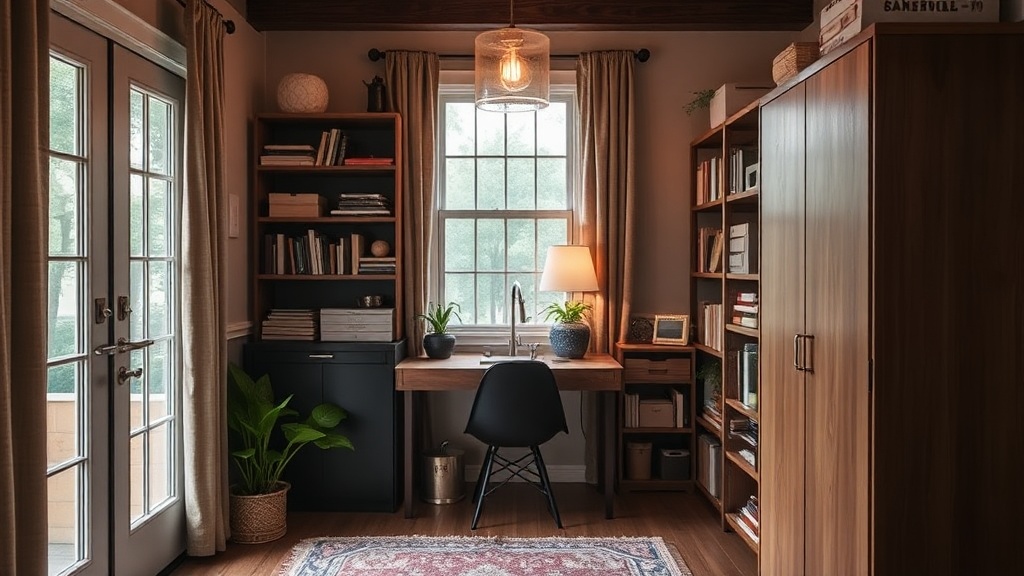
The Small Space Sanctuary: Mastering Vertical Storage

The Reality of the "Cozy" Studio
Let’s be real for a second: the real estate market is currently a joke. You’re likely paying a premium for a "charming studio" that is actually just a glorified walk-in closet with a hot plate. I’ve seen the floor plans, and I’ve seen the way landlords try to gloss over the lack of square footage with words like "intimate" or "efficient."
When you’re living in a space where your bed is also your dining table and your desk, the clutter isn't just an eyesore—it’s a mental health hazard. When every surface is covered in mail, coffee mugs, and charging cables, your brain never actually feels like it’s "off" the clock. This is where most renters fail. They try to solve a space problem by buying more furniture, which only leads to a cramped, suffocating environment. The secret isn't more floor space (you don't have any); the secret is mastering the vertical plane.
If you want to stop feeling like you're living in a cardboard box, you need to stop looking at your walls as mere boundaries and start seeing them as prime real estate. Here is exactly how to reclaim your sanity through vertical storage.
1. The Golden Rule: Look Up, Not Out
The biggest mistake I see new renters make is the "horizontal obsession." You want a coffee table, a bookshelf, and a side table. Suddenly, you can't walk from your bed to your bathroom without a tactical maneuver. To survive a small apartment, you must prioritize height over width.
Utilize the "Dead Zones"
Every apartment has dead zones—the six inches between the top of your wardrobe and the ceiling, the narrow gap between your fridge and the wall, or the empty space above your door frame. These are your new best friends.
- Above-Door Shelving: A single shelf installed above your bathroom or bedroom door can hold items you rarely use, like extra towels, seasonal decor, or even that stack of books you’ve been meaning to read.
- High-Level Perimeter Shelving: Running a shelf around the perimeter of a room about 12-18 inches below the ceiling creates a massive amount of storage without making the room feel "closed in." It also draws the eye upward, making the ceiling feel higher.
- The Gap Filler: If there is a 5-inch gap between your desk and the wall, don't let it go to waste. A slim, rolling utility cart can hold everything from stationery to skincare.
By moving your storage to the upper reaches of the room, you keep your floor clear. A clear floor creates the illusion of more space, which is essential if you are trying to master the minimalist aesthetic without actually living in a void.
2. Wall-Mounted Everything
If it can be hung, it should be hung. Floor-standing furniture is a luxury that most of us, in our current economic reality, simply cannot afford to waste space on. Every time you buy a piece of furniture that occupies a footprint on the floor, you are losing precious square footage.
The Kitchen: The Command Center
The kitchen is usually the most cramped area in a rental. You can't remodel the cabinets, so you have to hack them.
- Magnetic Knife Strips: Stop taking up drawer space with bulky knife blocks. A magnetic strip on the backsplash is sleek, professional, and saves room.
- Pegboards: This is the ultimate renter hack. A pegboard (like the ones from IKEA) can hold pots, pans, colanders, and even small spice jars. It turns your kitchen tools into a functional piece of wall art.
- Floating Shelves: Instead of a bulky baker's rack, use floating shelves to display your most aesthetic coffee mugs and jars.
The Living & Workspace
Your desk shouldn't be a mountain of tangled cords and loose pens. Use wall-mounted organizers to keep your workspace clean. This isn't just about organization; it's about maintaining a sense of order that supports your well-being. A cluttered desk often leads to a cluttered mind, which can disrupt your ability to sync your body clock and sleep better because your brain can't shut down in a chaotic environment.
3. Modular and Multi-Functional Systems
When you do buy something that *has* to sit on the floor, it needs to work twice as hard as a standard piece of furniture. I'm talking about modularity. If a piece of furniture only does one thing, it’s a bad investment.
The Power of the Tension Rod and Command Hooks
Since most of us are living under the thumb of strict lease agreements that forbid drilling holes into the walls, we have to be smart. Command hooks and tension rods are the unsung heroes of the rental world.
- The Tension Rod Hack: Use a tension rod inside a window frame to hang lightweight curtains, or even inside a cabinet to hang cleaning supplies.
- Command Hooks for Everything: From hanging your headphones to organizing your jewelry, these are non-negotiable. Just make sure you follow the weight instructions—nothing ruins a mood like a fallen vase.
Furniture with a Purpose
If you’re buying a bed, it better have drawers underneath. If you’re buying an ottoman, it better be a storage bin. This is non-negotiable. Every piece of furniture in a small apartment must earn its keep. This philosophy extends to your lifestyle as well; just as you wouldn't buy a useless chair, you shouldn't adopt habits that drain your energy. For example, if you're looking to optimize your environment for health, consider how your light exposure affects you. You can learn more about resetting your sleep schedule for spring to ensure your living space supports your biological needs.
4. Bringing the Outside In (Vertically)
One of the biggest complaints about small apartments is that they feel "stale" or "suffocating." Adding greenery is the easiest way to fix this, but a standard floor plant will eat up your limited walking space. Instead, go vertical with your greenery.
Hanging planters are a game-changer. Whether you use ceiling hooks or a tiered hanging stand, you can create a "living wall" effect. This is particularly effective if you want to grow your own food. You can easily manage lease-safe indoor gardening by using wall-mounted herb kits. Not only does this provide fresh ingredients for your meals, but it also adds texture and life to your walls without taking up an inch of floor space.
If you have a balcony or a small patio, don't just leave it empty. Use vertical planters or a trellis to grow climbing plants. This can transform a tiny concrete slab into something resembling a Mediterranean oasis, making your outdoor space feel like a true extension of your home rather than an afterthought.
5. The Psychological Aspect of Verticality
There is a reason why people feel anxious in small spaces. It’s the feeling of being "hemmed in." When your eyes are constantly hitting objects at eye level, the walls feel closer. By moving your storage higher up, you create "negative space" at eye level. This empty space allows the eye to travel, creating a sense of openness and breathability.
This sense of openness is crucial for maintaining a healthy lifestyle. When your home feels like a sanctuary rather than a storage unit, you are more likely to engage in restorative habits. This could be anything from a consistent morning routine to practicing bio-harmony eating. A structured, organized environment provides the mental scaffolding necessary to maintain these long-term health goals.
"A small apartment isn't a limitation; it's a design challenge. The goal isn't to fit your life into a box, but to build a system that supports your life within the space you have."
Summary Checklist for Your Vertical Upgrade
Before you head to the hardware store or start browsing online, run through this quick checklist to ensure you're being strategic:
- Identify the Gaps: Where are the 5-10 inch gaps in my room?
- Audit the Walls: Can this item be hung instead of sat on a table?
- Check the Lease: Am I using renter-friendly adhesive or tension-based solutions?
- Prioritize Function: Does this piece of furniture serve at least two purposes?
- Think High: Have I utilized the space above my doors and windows?
Stop letting your apartment dictate how much room you have to breathe. Use these tips, get organized, and reclaim your space. You've paid the rent—now make sure you actually get to enjoy the life you're living inside it.