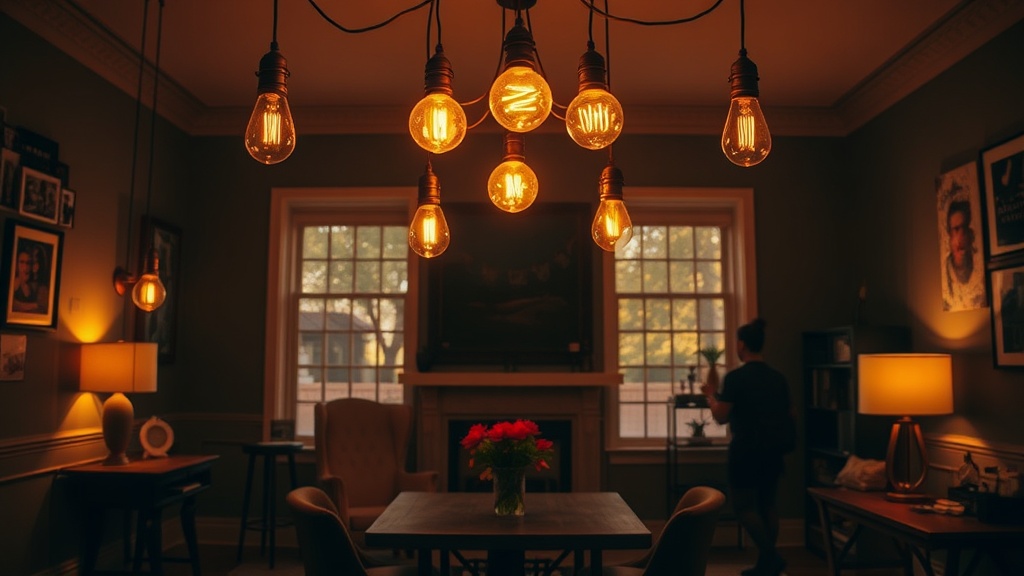
Fix Drab Lighting with Warm Bulb Swaps

Quick Tip
Switch from cool white bulbs to warm white (2700K) to instantly soften your space.
A single, harsh overhead bulb casts long, unflattering shadows across your living room, making the space feel clinical and cold. This is the "apartment lighting" trap—the default, high-wattage white light that comes with most rentals. This post explains how to swap out those sterile bulbs for warmer, more intentional lighting to change your entire room's mood.
What is the best color temperature for a living room?
The best color temperature for a cozy living room is between 2,700K and 3,000K. This range produces a soft, yellowish glow that mimics sunset or candlelight, which feels much more inviting than the blue-ish light of standard bulbs. If you want a slightly cleaner look without the "hospital" vibe, aim for 3,000K.
You can find these specific measurements on any bulb box—look for the "Kelvin" (K) rating. For a deeper dive into how light affects your eyes, check out the Wikipedia entry on color temperature.
When shopping, I highly recommend picking up a pack of Philips Hue smart bulbs or even basic GE Relax LED bulbs. It's a cheap way to create a high-end living room vibe on a tight budget. It's a small change, but it's massive for your mental well-being after a long workday.
How do I choose between LED and incandescent bulbs?
LED bulbs are the superior choice because they use significantly less energy and last much longer than traditional incandescent options. While some people miss the "warmth" of old-school bulbs, modern LED technology has caught up.
| Bulb Type | Best Use Case | Lifespan |
|---|---|---|
| LED | Daily overhead lighting & lamps | 15,000+ hours |
| Incandescent | Vintage-style Edison lamps | ~1,000 hours |
| Smart Bulb | Mood lighting & automation | Varies |
The catch? Most cheap LEDs can look a bit "flickery" or artificial if you don't check the quality. Stick to reputable brands like Lutron or Philips to avoid that weird, buzzing sensation. (Trust me, I've been there, and it's a nightmare.)
Can warm lighting make a small room feel bigger?
Warm, layered lighting actually makes a room feel more expensive and intentional, which can make a small space feel less cramped. Instead of one bright light in the center of the ceiling, use multiple light sources at different heights.
- Floor Lamps: Place these in corners to draw the eye upward.
- Table Lamps: These add "pools" of light that make a room feel layered.
- String Lights: Great for a soft, low-stakes glow in a bedroom or nook.
By adding these layers, you aren't just brightening the room; you're creating depth. If you're struggling with a tiny layout, you might also want to try using mirrors to brighten your living room to bounce that new, warm light around even more effectively.