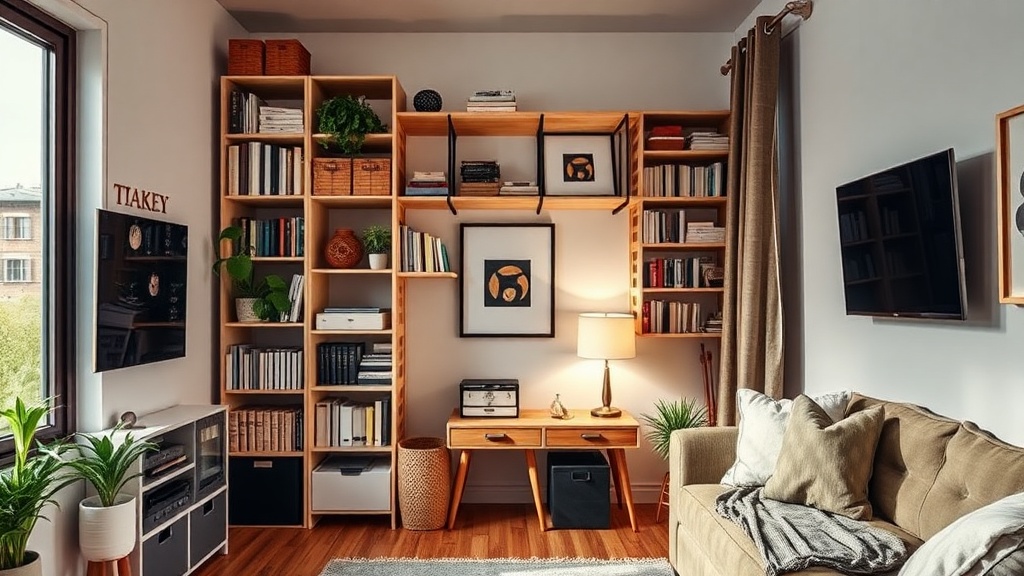
What Vertical Storage Solutions Actually Work in a Small Apartment?

Why do renters ignore their walls when square footage runs out?
You have brought home your new couch, your bookshelf is groaning under its load, and the floor space has vanished. In a small apartment, the instinct is to look outward—to squeeze in another cabinet, another shoe rack, another basket that juts into your walking path. But the real estate you are forgetting hangs right above your head. Vertical storage is not about climbing gym equipment or industrial scaffolding. It is about using walls, doors, and ceiling height to reclaim your floor and your sanity—without losing your security deposit.
This guide covers practical, renter-friendly ways to build upward. You will learn which systems actually hold weight, which ones damage walls (and which do not), and how to arrange vertical elements so your space feels larger, not cluttered. No drilling expertise required. No thousand-dollar built-ins. Just smarter use of the height you already have.
What are the best damage-free options for vertical storage?
Command strips and adhesive hooks have come a long way since the flimsy plastic hooks of the past. Today's damage-free mounting systems can hold surprising weight—some up to sixteen pounds per strip—when applied correctly. The trick is surface preparation. Clean the wall with rubbing alcohol (not household cleaners, which leave residue). Press the strip firmly for thirty seconds. Wait an hour before hanging anything. Skip these steps and your floating shelf will become a falling shelf.
For lightweight items—hats, lightweight baskets, string lights—basic adhesive hooks work perfectly. For heavier loads like small shelves or framed art, look for Command's picture-hanging strips or 3M's heavy-duty mounting tape. Always check the weight rating and stay well under it. Gravity is patient but inevitable.
Over-the-door organizers deserve more respect than they get. The cheap clear plastic shoe holders that flop around? Skip those. Instead, look for sturdy canvas or metal organizers designed for pantries or cleaning supplies. Hang them on closet doors for accessories, on bathroom doors for toiletries, or on bedroom doors for shoes and scarves. The back of a door is dead space until it is not—and it costs you zero wall damage.
Tension rods fit into this category too. A heavy-duty tension rod wedged between two walls can hold curtains, lightweight shelving, or hanging storage systems. In closets, they create instant shelves for bags or folded clothes. In kitchens, they become places to hang cleaning tools or utensils. Just measure twice; a tension rod that slips scratches paint and bruises toes.
How do you install shelves without drilling into drywall?
The fear of patching holes keeps many renters from installing proper shelving. But you have more options than you think. Leaning ladders and étagère shelves require zero wall attachment. They rest against the wall on their own, held stable by gravity and the weight of your books. Position them on carpet for extra grip, or add rubber pads to the feet. A leaning shelf five feet tall gives you four or five levels of storage in a footprint barely wider than a side table.
Freestanding shelving units are another renter's best friend. Metal wire racks, wooden bookcases, and modular cube systems all rise vertically without touching your walls. The key is choosing narrow, tall units rather than short, wide ones. A shelf that is twelve inches deep and six feet tall holds the same volume as one that is two feet deep and three feet tall—but the tall one leaves you more floor space to walk around.
If you absolutely must drill, know your options. Plastic wall anchors work in drywall and hold light loads. Toggle bolts hold much more weight but require larger holes to install. For the smallest possible holes that still hold real weight, look for self-drilling drywall anchors—the threaded kind that screw directly into the wall without pre-drilling. When you move out, fill the holes with spackle, sand smooth, and touch up with paint. Most landlords expect minor nail holes; they only charge for damage that needs real repair.
How can ceiling and high-wall storage free up your space?
Once you have used your walls up to eye level, look higher. Ceiling-mounted storage is underused in apartments because people assume it requires complex installation. Not so. Hanging pot racks in kitchens, suspended bike lifts in corners, and overhead garage-style storage in closets all mount to ceiling joists—not drywall—which means they hold serious weight safely.
In the kitchen, a hanging pot rack over your island or counter keeps cookware accessible but off your cabinets. Look for racks that hang from a single chain or cord if you worry about multiple ceiling holes. In bedrooms or closets, bike pulley systems lift seasonal items, luggage, or bulky blankets up and out of the way. The mechanism is simple: a rope and pulley that lowers the load when you need it, raises it when you do not.
High shelves—mounted a foot or two below the ceiling—create display space for items you rarely need. Decorative boxes, extra linens, archived documents, and sentimental items all live happily in the vertical periphery. You need a step stool to reach them, which is the point. Out of sight, out of mind, but not out of your apartment entirely. Mount these with proper brackets into studs when possible. If you cannot find studs, use heavy-duty toggle bolts rated for at least twice the shelf's expected load.
What mistakes make vertical storage look cluttered instead of organized?
More storage does not automatically mean better storage. The most common error renters make is treating vertical space as a dumping ground rather than a system. Piling boxes to the ceiling without labels, hanging random items wherever a hook exists, or mixing too many colors and materials—all of this creates visual chaos that makes a room feel smaller, not larger.
Stick to a limited palette. If you are using wire baskets, use the same style throughout. If you prefer wood shelving, keep the finish consistent. Visual consistency tricks the eye into seeing organization even when the contents vary wildly. Label everything that goes into high or hidden storage. You will not remember what is in that ceiling-mounted box six months from now.
Leave breathing room. A wall covered edge-to-edge with shelves and hooks feels oppressive. Follow the gallery wall rule: leave more empty space than filled space. If you are installing multiple shelves, vary the spacing between them. Uniformity looks institutional; asymmetry looks designed. And never block natural light sources with tall storage. The goal is to draw the eye upward, not to create a fortress that walls you in.
Finally, respect weight limits and physics. A shelf that sags under its load looks sad and becomes dangerous. Check your brackets and anchors every few months—set a phone reminder. Adhesive strips degrade over time, especially in humid bathrooms or kitchens. Tension rods slip slowly. A two-minute inspection prevents a midnight crash.
How much weight can different mounting systems actually hold?
Here is a quick reference for realistic load limits:
| System | Typical Load Limit | Best For |
|---|---|---|
| Small adhesive hooks | 1–3 lbs | Keys, lightweight decor, small bags |
| Large adhesive strips | 4–16 lbs | Framed photos, small shelves, mirrors |
| Tension rods | 10–20 lbs | Curtains, lightweight shelving, hanging storage |
| Plastic wall anchors | 10–25 lbs | Light shelving, towel bars, small cabinets |
| Toggle bolts | 30–50+ lbs | Heavy shelving, wall-mounted desks, bikes |
| Ceiling-mounted systems | 50–200+ lbs | Bikes, storage platforms, pot racks |
These numbers assume proper installation into appropriate materials. Drywall is weaker than plaster, which is weaker than brick or concrete. When in doubt, assume your walls are weakest and choose accordingly.
Where should you start with vertical storage in your apartment?
Begin with your biggest pain point. If shoes are overflowing, install an over-the-door organizer. If books are stacked on the floor, get a tall, narrow bookcase. If your kitchen counters are crowded, hang a pot rack or install adhesive hooks for utensils. One well-placed vertical solution beats five mediocre ones scattered around.
Measure your vertical spaces before buying anything. Door heights vary. Wall widths differ. That perfect over-the-toilet shelf might not clear your toilet tank. The leaning ladder that looked great online might block your closet door from opening fully. Use painter's tape to map out where items will sit before you commit to hardware.
Invest in quality mounting hardware even for temporary solutions. Cheap adhesive strips fail. Flimsy tension rods collapse. A few extra dollars for heavy-duty versions saves you the cost of replacing broken items and repairing damaged walls. And remember: vertical storage is not about displaying everything you own. It is about creating systems that keep your daily life functional and your floor space walkable. The best compliment your storage can receive is that nobody notices it at all—they just notice how spacious your apartment feels.
For more ideas on maximizing small spaces, check out Apartment Therapy's comprehensive guide to small space storage or browse Better Homes & Gardens' renter-friendly organization tips.