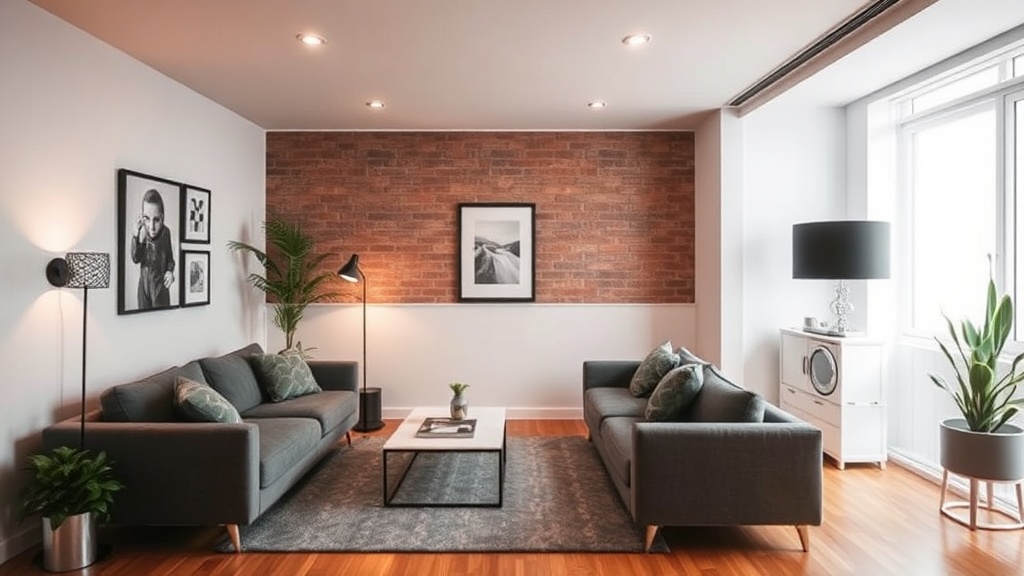
What Furniture Layout Actually Works in a Tiny Studio Apartment?

You walk into your new studio—fresh lease signed, keys in hand—and the open floor plan that looked charming online now feels like a blank wall staring back at you. One room. Everything happens here. Sleeping, eating, working, maybe even exercising. Without walls to separate functions, you're suddenly an interior designer by necessity. Get the layout wrong and your bed becomes your dining table becomes your desk. Get it right and 400 square feet feels surprisingly livable.
Why Does Furniture Placement Matter More in Small Spaces?
In a traditional apartment, you close a door and the bedroom disappears. In a studio, every piece of furniture competes for attention—and floor space. Poor placement creates visual clutter that makes the room feel smaller than it is. Strategic arrangement creates zones that help your brain switch between "work mode" and "relax mode" even when you're ten steps from your bed.
The psychology is real. When researchers at the American Psychological Association studied environmental stress, they found that perceived crowding—not actual square footage—determines how comfortable people feel in a space. A well-zoned studio often feels larger than a poorly arranged one-bedroom. Your layout choices directly impact your daily stress levels. That's worth getting right.
What Is the Best Way to Create Distinct Zones Without Walls?
The classic studio mistake: pushing everything against the walls. It seems logical—more open floor in the middle—but it actually emphasizes the room's boundaries and makes the space feel like a waiting room. Instead, use your furniture itself as architecture.
Float your sofa. Position it perpendicular to a wall with its back facing your sleeping area. Instant visual barrier. A narrow console table behind it adds storage without blocking light. This single move creates two distinct territories where there was one ambiguous rectangle.
Rug as room divider. A properly sized rug (bigger than you think—front legs of all furniture should touch it) anchors a seating area and signals "living room" to your brain. Choose a different texture or pattern from your bedding to reinforce the separation.
Vertical shelving. A tall bookcase perpendicular to the wall creates partial privacy for your bed while maintaining airflow and light. The IKEA KALLAX series has become a studio staple for good reason—open-backed versions let light through while still defining zones. Fill it with books and plants facing the living side, storage bins facing the bed side.
Where Should You Put the Bed in a Studio Apartment?
Your bed is the space hog. It's also the one piece you can't really downsize (twin beds are fine for college, less fine for actual adults). Placement determines whether your studio feels like a bedroom that happens to have a kitchen—or a real living space.
The alcove strategy. If your studio has any architectural weirdness—an indentation, a nook, a space beside the closet—that's your bedroom. Tuck the bed there and add a curtain rod or tension wire with floor-to-ceiling curtains you can pull closed. Morning light won't wake you. Guests won't stare at your unmade bed. The separation is psychological but powerful.
Against the window. Conventional wisdom says beds go on solid walls, but in studios, placing the headboard against a window frees up precious wall space for your desk or storage. Use a low headboard or skip it entirely. Sheer curtains behind the bed soften the light and create a backdrop that reads intentional rather than desperate.
The loft question. If you have ten-foot ceilings, a loft bed transforms a studio entirely. Suddenly there's room for a proper desk, a reading chair, maybe even a small sofa underneath. The trade-off? Making your bed becomes an athletic event. And you'll need to invest in quality bedding since guests will definitely see it from below.
How Do You Fit a Home Office Without Sacrificing Everything Else?
Remote work made this non-negotiable. The kitchen table worked for two weeks in 2020. For actual productivity, you need a dedicated workspace that doesn't require clearing dishes before every Zoom call.
The fold-down desk. Wall-mounted desks that hinge up when not in use have evolved beyond flimsy dorm furniture. Solid wood versions from Anthropologie's home collection or independent makers on Etsy look like wall art when closed. Install one facing a window if possible—natural light reduces eye strain and the view provides mental relief during long calls.
Dual-purpose dining. If you rarely entertain, your dining table becomes your desk. The key is visual transformation. A tablecloth during work hours? Too precious. Instead, invest in a quality desk pad that defines the workspace, then remove it for meals. A task lamp on a swing arm mounts to the wall and swings away when you're eating. These small rituals help your brain switch contexts.
The closet office. Extreme but effective. Remove the closet door. Install a shallow desk at counter height. Add a stool that tucks underneath. Your "office" disappears when you close the curtain. This works best for minimalists who've already downsized their wardrobe significantly—probably you, if you're reading studio layout guides.
What Storage Solutions Won't Make Your Studio Feel Cluttered?
Everything visible in a studio means everything must be curated. Open shelving is Pinterest-beautiful and practically dangerous—one messy shelf ruins the entire room's vibe.
Under-bed storage. Not plastic bins. A platform bed with built-in drawers looks intentional and holds surprising volume. If your bed frame has clearance, use uniform fabric bins on wheels that slide out smoothly. Mismatched cardboard boxes read "storage unit," not "intentional home."
Over-the-door everything. The back of your door is acreage. Over-door organizers with clear pockets work for shoes, cleaning supplies, pantry overflow. A full-length mirror that hooks over the door saves wall space and bounces light around.
Double-duty furniture. Ottomans with storage. Benches with lift-up seats. Coffee tables with drawers. Every piece should earn its keep two ways. The West Elm storage ottoman has hidden compartments large enough for blankets, board games, or the evidence of your online shopping habit you don't want visible.
Go up, not out. Floor lamps eat space. Wall-mounted sconces don't. Floating shelves above doorways store items you rarely need (seasonal decor, extra linens). The foot of space above your kitchen cabinets? That's real estate. Use it for attractive baskets or a trailing pothos that draws the eye upward, making ceilings feel higher.
How Can Lighting Make Your Studio Feel Larger?
One overhead fixture in the center of the room creates harsh shadows and emphasizes the box you're living in. Layered lighting at varying heights expands the perceived space.
Three-point lighting rule. Every zone needs three sources: overhead (ceiling fixture), task (desk lamp or reading light), and ambient (fairy lights, candles, uplighting). Vary the color temperatures—warm for relaxing areas, cooler for work zones. Your brain reads these cues as "different rooms."
Mirror placement. Position a mirror opposite your largest window. It doubles the natural light and creates the illusion of depth. A full-length mirror angled in a corner makes the room feel deeper than it is. The frame matters—thin metal reads modern and doesn't compete with other elements.
LED strips. Cheap, hidden, transformative. Run them under floating shelves, behind your TV, or along the toe-kick of your kitchen cabinets. The indirect glow eliminates dark corners that make spaces feel smaller. Most plug-in versions connect to smart outlets for voice control—no wiring required.
Final Layout Principles to Remember
Every studio is different—ceiling heights, window placements, radiator locations all demand flexibility. But these principles hold:
- Traffic flow matters more than symmetry. You'll walk this path a hundred times daily. Make it unobstructed.
- Leave breathing room. Furniture crammed together creates anxiety. Six inches between pieces makes everything feel intentional.
- Edit ruthlessly. If you haven't used it in a year, it doesn't belong in 400 square feet. The best studio layouts belong to people comfortable with owning less.
- Invest in one statement piece. One beautiful chair. One real painting. One quality rug. Everything else can be functional and forgettable—this one item gives the room personality.
Your studio will never be a four-bedroom house. It doesn't need to be. What it can be—what good layout creates—is a space that supports your actual life without constant friction. A place where you sleep well, work productively, and occasionally host friends without apologizing for your square footage. That's not settling. That's good design.