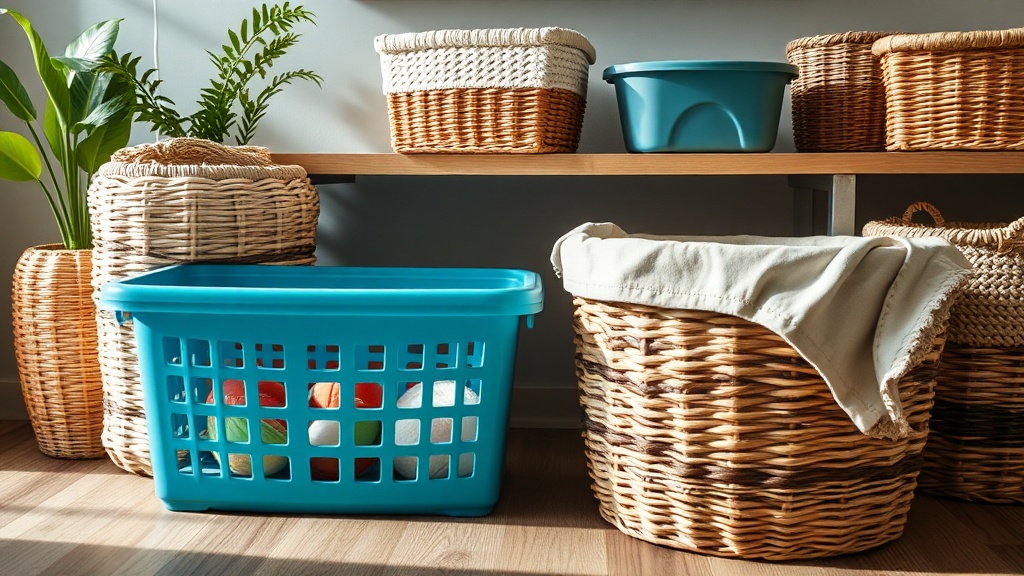
Stop Buying Cheap Plastic Storage Bins and Try Decorative Baskets Instead

You are standing in the middle of your living room, looking at a stack of translucent gray or white plastic bins tucked under your coffee table or shoved into a corner. They serve a functional purpose, but they look like leftovers from a college dorm or a warehouse. This is the "plastic bin trap": the tendency to prioritize low cost and immediate utility over the long-term aesthetic of your home. While plastic bins are easy to stack, they create visual clutter and make a finished apartment look unfinished. Switching to decorative baskets—whether made of seagrass, wicker, or cotton rope—transforms storage from a messy necessity into a deliberate design choice that adds texture and warmth to your space.
This guide explains why moving away from synthetic storage improves your interior design and provides practical steps for selecting, sizing, and styling baskets in a small apartment setting.
The Problem with Plastic Storage
Plastic bins, particularly the stackable variety found at big-box retailers like Target or IKEA, have a specific "visual weight." Because they are often semi-transparent or highly reflective, they draw the eye toward the contents rather than the object itself. If you are storing mismatched cables, old notebooks, or loose remote controls, a plastic bin highlights that chaos. Even if the bin is opaque, the hard edges and synthetic material clash with organic elements like wooden furniture, linen upholstery, or indoor plants.
Furthermore, plastic is rarely a long-term solution for high-end aesthetics. It tends to scratch, discolor, or crack over time. When you use plastic for your living room or bedroom storage, you are essentially signaling that the room is in a state of transition. Decorative baskets, conversely, are treated as decor. A high-quality woven basket is an accessory that complements your room's color palette and adds a layer of tactile interest that plastic simply cannot replicate.
Choosing the Right Material for Your Space
Not all baskets are created equal. The material you choose will dictate the "vibe" of your room and how much maintenance the item requires. You should select materials based on the room's existing textures and the type of items you intend to store.
Seagrass and Water Hyacinth
These are the most common materials for coastal or bohemian-style interiors. They offer a tight weave and a natural, slightly yellowish or tan hue. These are excellent for living rooms because they feel organic and relaxed. However, be aware that seagrass can be slightly abrasive, so avoid using these for storing delicate fabrics like silk scarves or fine linens without a liner.
Rattan and Wicker
Rattan is sturdier and has a more structural, architectural look. It is ideal for heavier items like thick coffee table books or even small throw pillows. Because rattan is more rigid, it holds its shape better in high-traffic areas like entryways. If you are looking for a more structured, "mid-century modern" look, opt for a darker-stained rattan.
Cotton Rope
Cotton rope baskets are soft, flexible, and often come in solid colors like cream, navy, or charcoal. These are the best choice for bedrooms or nurseries. Because they lack sharp edges, they are much safer around low furniture and much easier to use for storing soft goods like laundry, blankets, or even plush toys. They are also much easier to clean; many can be spot-cleaned with a damp cloth or even tossed in a gentle wash cycle depending on the manufacturer's instructions.
Practical Applications by Room
To avoid the appearance of clutter, you must match the scale and function of the basket to the specific room. A basket that is too small looks like an afterthought; a basket that is too large looks like an obstacle.
The Living Room: Texture and Utility
In the living room, your goal is to hide the "functional mess." Instead of a plastic bin for your extra throw blankets, use a large, deep seagrass basket placed next to your sofa. This turns a pile of fabric into a styled vignette. For coffee table organization, skip the plastic trays and use a smaller, structured rattan basket to hold remotes, coasters, and a candle. This keeps the items contained while adding a layer of texture that works well with layered lighting setups, as the natural shadows in the weave add depth to the room.
The Bedroom: Softness and Organization
The bedroom should feel calm. Replace plastic bins on your dresser or nightstand with cotton rope baskets. These are perfect for organizing skincare, hair accessories, or charging cables. A large cotton rope basket at the foot of the bed can serve as a "catch-all" for discarded clothes or extra linens, providing a much softer visual transition than a plastic laundry hamper. This approach aligns with the goal of making a rental bedroom feel more curated and intentional.
The Entryway: Durability and Structure
The entryway is a high-impact area where things often get messy. You need something that can handle the weight of shoes or heavy bags. A sturdy, dark-stained wicker basket is ideal here. It provides enough structure to stand upright even when partially empty and can handle the moisture from damp shoes better than a soft cotton basket. Use a medium-sized basket for mail and keys to prevent the "junk drawer" effect on your entryway console table.
The "Liner" Technique: Solving the Messy Interior Problem
One of the biggest complaints about decorative baskets is that they are not "clean" inside. The weave can snag clothing, and small items like pens or jewelry can fall through the gaps. To solve this, do not just throw items directly into the basket. Use a liner to maintain the aesthetic while ensuring functionality.
- Linen Liners: For a high-end look, use a simple linen or canvas bag inside your basket. This is particularly effective for seagrass baskets. It prevents small items from falling out and adds an extra layer of sophisticated texture.
- Solid Color Fabric: If you are using a cotton rope basket, you can use a simple folded cotton towel as a base to keep items upright and organized.
- The Tray Method: If you are using a basket for small, loose items (like remote controls or stationery), place a small wooden or metal tray inside the basket. This creates a "container within a container," making it much easier to lift the items out and preventing them from getting lost in the weave.
Sizing and Placement Rules
A common mistake in small apartments is buying baskets that are too large for the available floor space. A basket that takes up 30% of your walkway is a tripping hazard, not a design element. Follow these three rules for placement:
- The Rule of Three: When styling a shelf or a side table, use a set of three baskets of varying sizes. This creates a visual hierarchy. A tall, thin basket next to a short, wide one is much more interesting than three identical bins lined up in a row.
- Mind the Clearance: Before buying a large floor basket for your living room, measure the clearance between your sofa and your coffee table. You want at least 12 to 18 inches of walking space. If the basket encroaches on that, it will feel like clutter rather than decor.
- Avoid "Floating" Baskets: A basket looks best when it is part of a group. Do not place a single small basket in the middle of a large, empty floor. Instead, pair it with a plant or a stack of books to "ground" it in the space.
By replacing your utilitarian plastic bins with intentional, textured baskets, you move away from the mindset of "storing stuff" and toward the mindset of "designing a home." It is a small investment that yields a massive return in how your apartment feels and looks to both you and your guests.