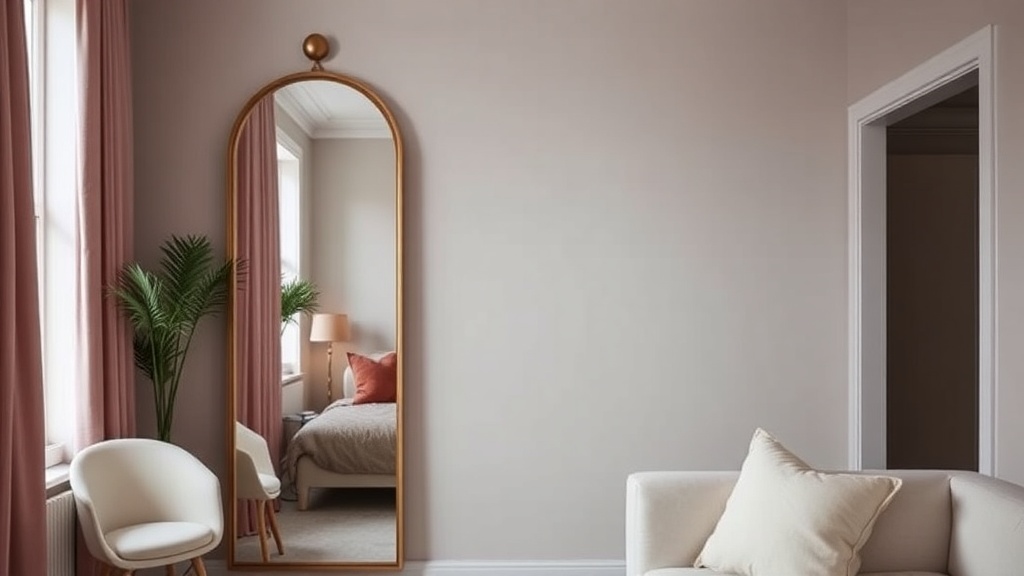
How to Use Mirrors to Make a Small Apartment Feel Bigger

Quick Tip
Hang a mirror opposite or adjacent to a window to bounce natural light deep into the room and instantly create the illusion of more space.
This post covers simple mirror placement tricks that visually expand tight living rooms, bedrooms, and entryways. You'll learn where to hang mirrors, what sizes to choose, and how to avoid common mistakes that waste wall space and make rooms feel smaller than they already are. Whether you're renting a studio or furnishing a one-bedroom, these ideas don't require a big budget or permanent changes.
Where Should You Place a Mirror to Maximize Space?
Opposite a window is the best spot. That placement reflects natural light deep into the room, which creates an instant sense of depth you can't get from paint alone. Don't have a window? Position a mirror across from a light fixture, a bright piece of art, or even a leafy plant instead.
Here's the thing: height matters too. A mirror hung too high won't catch light at eye level, and the effect falls flat. Keep the center around 57 to 60 inches from the floor. In narrow hallways, a full-length mirror (like the IKEA HOVET) can practically double the visual width. The catch? Avoid placing mirrors directly across from cluttered areas. They'll reflect the mess, not the space. Same goes for dark corners. A mirror there just multiplies the shadows.
What Size Mirror Works Best in a Small Apartment?
Bigger is usually better. A large mirror acts like an extra window. Small mirrors, unless grouped in a gallery wall, tend to read as decorative accents rather than space expanders.
Worth noting: oversized floor mirrors from brands like West Elm or Target's Project 62 line work well in studio apartments. They lean against walls without requiring studs or drills. That said, measure first. A mirror wider than the furniture below it looks top-heavy and awkward. A good rule of thumb is to keep the mirror about two-thirds the width of the sofa or console beneath it. Go tall when you can't go wide. A vertical mirror draws the eye up and emphasizes ceiling height.
| Mirror Type | Best For | Approximate Price |
|---|---|---|
| Full-length floor mirror | Bedrooms, narrow corners | $80 – $200 |
| Large wall mirror | Living rooms above sofas | $100 – $300 |
| Round decorative mirror | Entryways, bathrooms | $40 – $150 |
| Mirrored furniture (console, cabinet) | Small dining areas | $150 – $500 |
Do Frameless Mirrors Make Rooms Look Bigger Than Framed Ones?
Yes, frameless mirrors usually win in tight spaces. Thin edges disappear into the wall, so the reflected space seems to continue. Thick frames create a visual stop that can box the room in.
However, a slim metal frame in black or brass can add structure without bulk. Apartment Therapy recommends avoiding ornate carved frames in apartments under 600 square feet. The extra detail competes with the reflected space. Instead, go for clean lines—think CB2's Infinity collection or simple pieces from HomeGoods.
Mix it up. One oversized frameless piece above the couch, plus a smaller framed round mirror by the door, keeps things interesting. Vary the shapes. Rectangles stretch horizontally; ovals soften vertical corners. (A convex mirror can add drama, though it's tricky to place.) Light bounces off multiple surfaces. Walls recede. The room breathes.