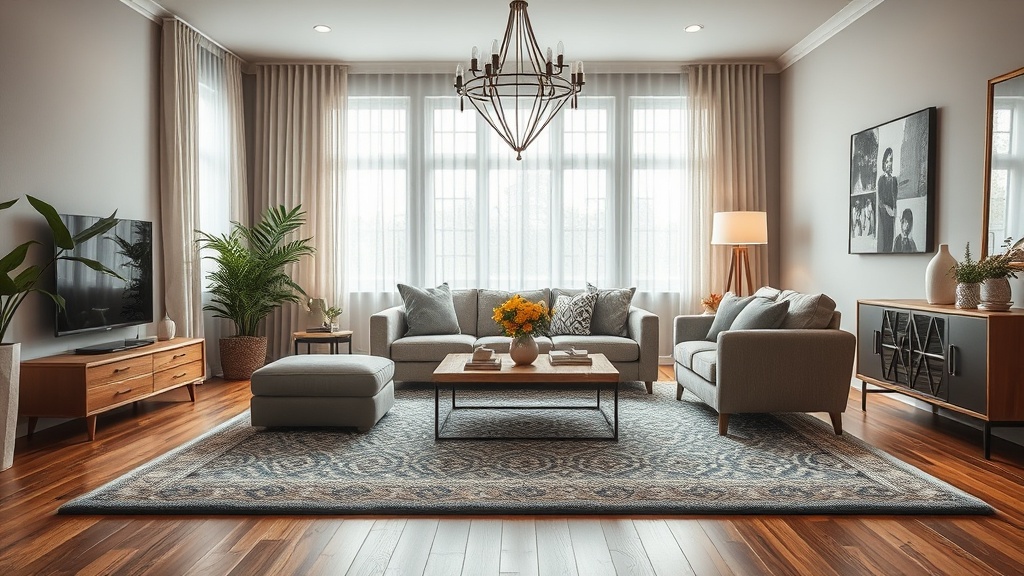
How to Choose the Right Rug for Your Living Room Layout

Why Your Rug Choice Changes Everything
Did you know that a single area rug can actually reduce ambient noise in a room by up to 30%? It isn't just about aesthetics; it's about acoustics and comfort. Choosing a rug for your first apartment living room is often the most significant decision you'll make regarding your floor plan. The wrong size makes a room look smaller and disconnected, while the right one anchors your furniture and makes a rental space feel intentional. This guide covers the technical side of rug selection, from material durability to sizing rules that prevent your living room from looking disjointed.
What Size Rug Do I Need for a Living Room?
The most common mistake I see in first apartments is buying a rug that is far too small. A tiny rug sitting in the middle of the floor looks like a "floating island" and breaks the visual flow of the room. It makes the furniture look scattered rather than grouped. To avoid this, you need to follow specific placement rules based on your furniture arrangement.
- The All-Legs-On Rule: If you have a large living room, aim for a rug large enough that all your furniture (sofa, chairs, coffee table) sits entirely on the rug. This creates a formal, high-end look.
- The Front-Legs-On Rule: This is the most common standard for smaller apartments. The front legs of your sofa and any accent chairs should sit on the rug, while the back legs stay on the bare floor. This pulls the seating group together without requiring a massive, expensive rug.
- The Coffee Table Only Rule: This is a last resort. If your space is truly tiny, you might only place the coffee table on the rug. However, this often looks disconnected unless the rug is quite large and the furniture is positioned very close to it.
When in doubt, err on the side of larger. A rug that is slightly too big can be fixed with furniture placement, but a rug that is too small is a permanent mistake. You can check out Architectural Digest for high-end inspiration, but remember that their scale is often much larger than a standard Seattle studio or one-bedroom layout.
Which Rug Material Lasts Longest in High Traffic Areas?
If you spend a lot of time sitting on the floor or have pets running through your living room, the material of your rug matters more than the pattern. Not all textiles are created equal. Synthetic fibers like polyester and nylon are incredibly durable and stain-resistant, making them great for high-traffic zones. However, they can sometimes feel a bit "plastic-y" underfoot compared to natural fibers.
| Material | Durability | Maintenance Level | Best For |
|---|---|---|---|
| Wool | Very High | Moderate | Longevity and softness |
| Jute/Sisal | High | Low (Hard to clean) | Natural texture/Boho looks |
| Polyester | High | Easy | Budget-friendly/Spills |
| Cotton | Low | Easy | Low-traffic accent areas |
Wool is the gold standard for a reason. It's resilient, stays plush, and naturally resists fire and many stains. If you can afford the upfront cost, a wool rug is a better long-term investment. If you're on a tighter budget, look for high-quality polypropylene. Avoid thin, flat-weave cotton rugs for your main seating area; they tend to bunch up and trip people after just a few months of use.
How Do I Pick a Color That Won't Go Out of Style?
Colors are tricky. A bright, neon rug might look great in a showroom, but it can become visually exhausting in a small apartment after just a few weeks. To keep your space feeling calm, consider the "Neutral Base, Bold Accent" method. This means choosing a rug with a neutral base—think creams, greys, or tans—and adding color through your pillows, throws, and art.
If you want a pattern, look for something with a low-contrast design. A high-contrast geometric pattern can be very loud and make the room feel smaller. A subtle, low-contrast pattern provides texture and visual interest without overwhelming the senses. If you're worried about showing wear, a rug with a variegated or "distressed" pattern is a secret weapon. These designs hide crumbs, pet hair, and small stains much better than a solid, light-colored rug. You can find great textured options at places like Wayfair or IKEA, but always read the material composition before you hit buy.
One thing to keep in mind is the light in your room. Seattle apartments often deal with low, grey light during the winter months. A rug that looks bright in a sunny warehouse might look dark and heavy in a north-facing apartment. Always check the color swatch in natural light if possible, or look for reviews that include photos from real customers in different lighting conditions.
Don't forget the rug pad. A rug without a pad is a safety hazard and a recipe for a ruined floor. A high-quality felt or rubber rug pad provides grip, prevents the rug from bunching, and adds an extra layer of cushioning. It also protects your apartment's hardwood or laminate floors from being scratched by the rug's underside. It's a small expense that makes a massive difference in how the room feels underfoot.