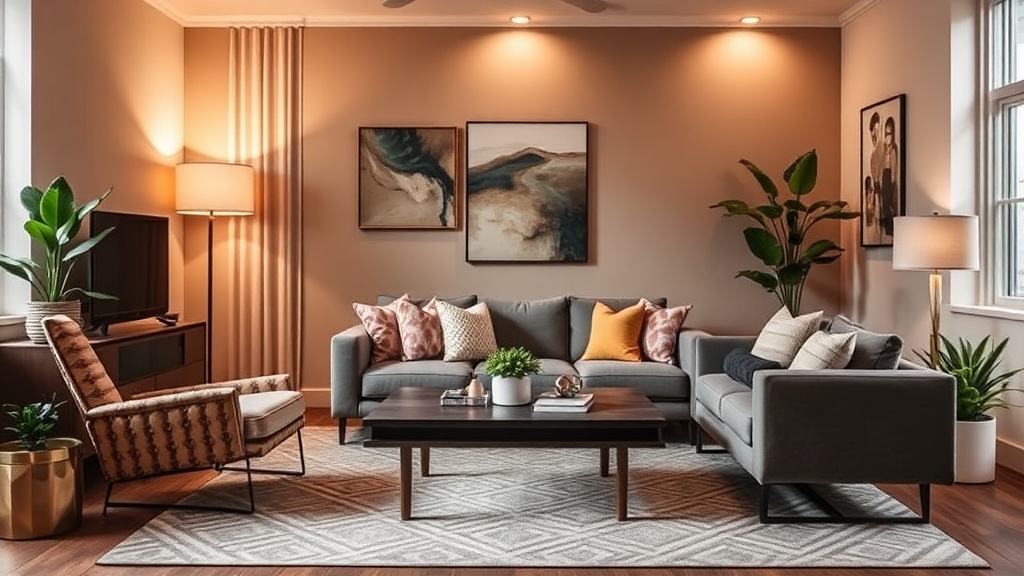
First Apartment Living Room Essentials: The Complete Furniture Guide

What Does a First Apartment Living Room Actually Need?
This guide covers the furniture pieces that turn an empty living room into a functional, comfortable space you'll actually want to spend time in. From seating that won't break the bank to storage that hides the chaos of daily life, here's everything worth buying — and what can wait until later.
What Seating Should You Buy First for a Small Living Room?
Start with a sofa that fits both the room and the doorways leading into it. Nothing's worse than falling in love with a couch that won't make it up the stairs. Measure twice — the entry path, the elevator (if there is one), and the room itself.
The IKEA Kivik remains a smart starter choice. It's under $600, the covers swap out when you inevitably spill coffee, and the low profile works in studios and one-bedrooms alike. The seat depth hits that sweet spot — deep enough to curl up with a book, not so deep that short legs dangle awkwardly.
That said, a sofa alone rarely cuts it. You'll want a second seating option for guests (or just for spreading out). Skip the matching armchair set — it reads "furniture showroom." Instead, try a contrasting accent chair. The Burrow Vesper Chair complements most sofas without competing, and it ships in manageable boxes that won't scrape the hallway walls.
Worth noting: sectionals look tempting. Don't buy one unless the room is at least 12 feet in both directions. Otherwise, you're building a fortress that cuts the space in half. In tight quarters, two compact pieces beat one oversized monster every time.
The Coffee Table Question
Some designers argue against coffee tables in small spaces. They're wrong — you need somewhere to set down a drink, prop up your feet, and stack the three books you'll pretend to read. The trick is choosing wisely.
Nesting tables solve almost every small-space problem. The West Elm Mid-Century Nesting Coffee Tables tuck away when you need floor space, expand when you're entertaining, and the walnut finish hides dust between cleanings (let's be honest). At around 20 inches wide, the large table won't dominate the room, and the smaller companion piece becomes a side table next to the sofa.
Glass-topped tables work in theory — they disappear visually. The reality? Fingerprints. Constantly. You'll spend more time cleaning than enjoying them. Solid wood or wood-veneer tops are forgiving. They scratch, sure — but those scratches become character. Glass just looks dirty.
How Much Storage Does a First Apartment Living Room Really Need?
More than you think. Way more. New renters consistently underestimate clutter by about 40 percent — that's not a scientific figure, just the lived experience of anyone who's helped a friend move.
The Target Threshold Carson Bookcase runs about $130 and holds more than books. Woven baskets on the lower shelves hide remotes, chargers, spare blankets, and that collection of takeout menus you'll never use but can't throw away. Keep the upper shelves for display — a plant, a lamp, maybe one nice object that suggests you have taste.
Here's the thing about TV stands: they shouldn't be an afterthought. The television anchors most living rooms visually, so the piece beneath it matters. The Burrow Index Media Console (around $800) costs more than particle-board alternatives, but the solid walnut construction survives multiple moves. That's the math to do — price divided by years of use. A $300 pressed-wood unit that swells and warps in year two is more expensive than quality built to last.
"Storage isn't about hiding your life — it's about choosing what deserves visibility."
Floating shelves look clean on Instagram. They're a pain to install properly (find the studs, please — don't trust drywall anchors with anything heavy) and they collect dust. Unless you're renting a place with concrete walls where drilling isn't allowed, a low credenza or console table offers more practical storage without the mounting anxiety.
The Comparison: Storage Options for Small Living Rooms
| Storage Type | Best For | Price Range | The Catch? |
|---|---|---|---|
| Bookcase with Baskets | Hiding clutter, vertical storage | $100–$200 | Can look busy if overfilled |
| Storage Ottoman | Blankets, board games, extra seating | $80–$250 | Must be opened to access items |
| Media Console | Electronics, cables, display space | $200–$800+ | Takes up floor space |
| Under-Sofa Drawers | Seasonal items, shoe overflow | $30–$60 | Only works with raised sofas |
What Lighting Actually Makes a Living Room Feel Finished?
Overhead lighting alone makes a room feel like a dentist's office. You need layers — ambient, task, and accent — working together.
The Threshold Globe Floor Lamp from Target costs around $60 and solves most ambient lighting problems. Position it behind the seating area, aimed upward and outward. The reflected light softens shadows and makes the ceiling feel higher. It's the opposite of that one harsh ceiling fixture every rental seems to have.
Task lighting means a reading lamp. The IKEA Riggad (with wireless charging built into the base) runs $70 and eliminates the bedside charger problem entirely. The adjustable arm actually stays where you put it — a surprisingly rare quality in affordable lamps.
For accent lighting, string lights have their place, but don't default to them. The Schoolhouse Isaac Plug-In Sconce ($269) mounts without an electrician and adds warmth to a dark corner. Yes, it's an investment. But lighting transforms space more than almost any furniture purchase. A cheap sofa in a well-lit room looks intentional. An expensive sofa under bad lighting just looks sad.
One practical note: buy warm bulbs (2700K). Daylight bulbs (5000K+) belong in kitchens and bathrooms. In a living room, they make everything feel clinical. You'll notice the difference immediately — warm light flatters skin tones, wood furniture, and late evenings.
What About Rugs, Curtains, and the Soft Stuff?
The right rug defines the seating area and absorbs sound (apartment living means shared walls — your neighbors will thank you). The Rugs USA Moroccan Trellis Shag comes in sizes starting at 5x7 for under $150. The pattern hides everything — pet hair, crumbs, that wine spill from New Year's. Natural fiber rugs like jute look great and cost less, but they're scratchy underfoot and impossible to clean.
Size matters more than pattern. A rug that's too small — with the front legs of the sofa off the edge — looks like a bath mat. The front legs of all seating should sit on the rug. In a small living room, that usually means a 5x8 minimum, 8x10 if the space allows.
Curtains should hang high and wide. Mount the rod 4–6 inches above the window frame, and extend it 6–10 inches past the sides. The IKEA Lenda curtains ($40 for a pair) are cotton, washable, and long enough for standard 8-foot ceilings. This trick makes windows look larger and ceilings feel taller. It's the cheapest renovation you can do.
Pillows and throws aren't optional extras — they make a rental feel like yours. The H&M Home linen cushion covers ($13 each) change seasonally and wash well. Buy pillow inserts one size up from the cover (20-inch insert for an 18-inch cover) for that full, expensive look.
What Can Wait Until Later?
Not everything needs to arrive on move-in day. A TV console matters; the TV itself can come next month. Side tables help; that vintage bar cart can wait. Art should go up eventually, but empty walls for a few weeks won't hurt anyone.
The catch? Don't postpone everything indefinitely. There's a difference between being selective and being paralyzed. Buy the pieces that affect daily comfort first — seating, lighting, something soft underfoot. The decorative objects will find you at flea markets, on travels, as gifts. Those tell your story. The sofa just needs to be comfortable.
For more guidance on designing small spaces, Apartment Therapy's small space coverage remains the gold standard. When it's time to think about your kitchen setup, The Kitchn's first apartment kitchen guide covers the gear you'll actually use. And for furniture assembly that won't end in tears, IKEA's TaskRabbit partnership connects you with people who enjoy reading those wordless instruction booklets (they exist).
Start with what you need to live comfortably. Add what you love as you find it. The best living rooms evolve — they aren't purchased in a weekend.