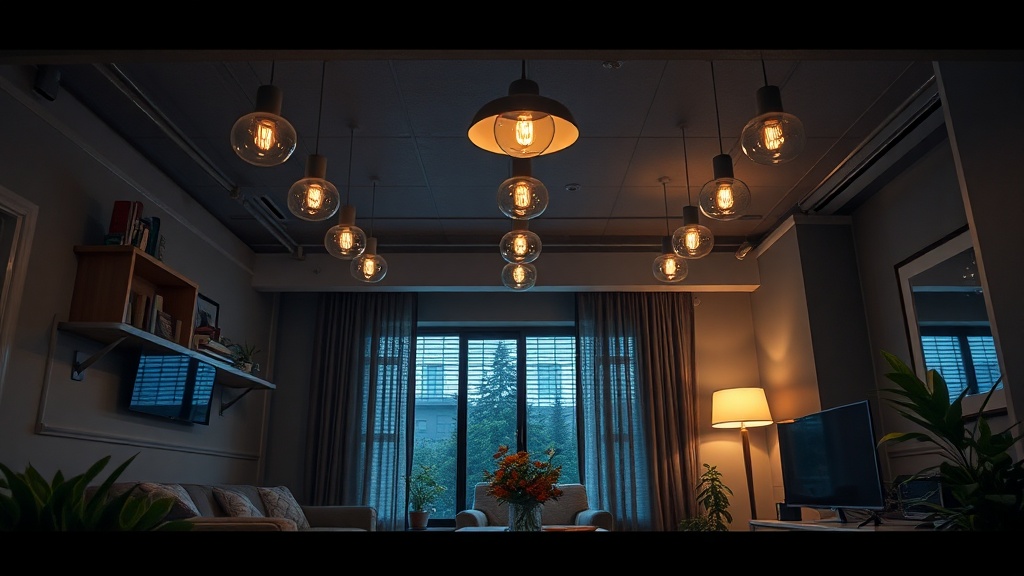
Ditch the Overhead Lights and Fix Your Apartment Lighting Forever

You walk into your living room at 7:00 PM, flip the switch, and are immediately blasted by a harsh, clinical light emanating from a single bulb in the center of the ceiling. It feels less like a home and more like a doctor's waiting room or a high school gymnasium. This is the "overhead light trap," and it's the fastest way to make a perfectly decorated apartment feel cheap and uncomfortable. This post breaks down why your overhead lights are ruining your vibe and how to build a layered lighting system using lamps and smart bulbs instead.
Most people move into their first apartment and think they're done once the furniture arrives. They buy a sofa, a rug, and a coffee table, but they forget that light is a physical element of a room—just like a wall or a floor. If you rely solely on the big light, you're stuck with flat, unflattering shadows that make even expensive furniture look mediocre.
Why Does My Apartment Feel So Harsh?
Your apartment feels harsh because overhead lighting creates high-contrast shadows and a single point of light that flattens the room. When light comes from directly above, it creates "raccoon eyes" (those dark shadows under your eyes) and makes every surface look harsh. It lacks the warmth and depth that human eyes naturally crave in a relaxing environment.
The problem is often the color temperature of the bulbs. Most standard apartment-issued bulbs are "Daylight" or "Cool White," which have a blueish tint. While this is great for a surgical suite, it’s terrible for a living room. You want something closer to the 2700K mark—a warm, yellowish glow that mimics sunset or candlelight.
To fix this, you need to stop thinking about "the light" and start thinking about "light sources." A well-lit room should have at least three distinct levels of light working together. If you're still shopping for your space, check out my list of must-have furniture pieces to ensure your layout actually accommodates these extra light sources.
How Do I Layer Lighting in a Small Apartment?
Layering lighting means using three different types of light—ambient, task, and accent—to create depth and mood. You can't achieve a high-end look with just one source; you need to mix heights and intensities.
Here is the breakdown of the three layers you need to master:
- Ambient Lighting: This is your base layer. Instead of the ceiling fixture, use a floor lamp with a large shade to bounce light off the ceiling or walls.
- Task Lighting: This is functional light for specific activities. Think of a small desk lamp for working or a reading lamp next to your armchair.
- Accent Lighting: This is the "jewelry" of the room. It’s the light that highlights a specific object, like a plant, a piece of art, or a bookshelf.
A quick way to start is by adding a floor lamp in a corner. A lamp like the IKEA HEKTAR or a classic tripod lamp adds height and fills a dark corner that a ceiling light simply can't reach. It changes the way your eyes perceive the boundaries of the room.
Don't go overboard with the brightness. If every lamp is on at 100% brightness, you've just created a brighter version of the same harsh overhead light. The goal is to have multiple dim sources rather than one bright one.
The Comparison of Light Types
| Light Type | Best Use Case | Typical Vibe | Example Product |
|---|---|---|---|
| Floor Lamps | Filling empty corners | Cozy & Grounded | Anglepoise Lamp |
| Table Lamps | Side tables / Desks | Intimate & Focused | Target Threshold Lamps |
| String/LED Strips | Behind TV / Under cabinets | Modern & Glowy | |
| Sconces | Wall art / Hallways | Architectural | Plug-in Wall Sconces |
What Is the Best Bulb Color Temperature?
The best color temperature for a residential living space is between 2200K and 3000K. This range provides a warm, inviting glow that is easy on the eyes and helps your body transition into "rest mode" in the evening.
When you're shopping for bulbs, look at the Kelvin (K) rating on the box. If it says 5000K, put it back—that's a blue-white light designed for a warehouse. If it says 2700K, you've found the sweet spot for a living room or bedroom. If you want even more control, I highly recommend getting smart bulbs from a brand like Philips Hue or Nanoleaf. These allow you to change the color temperature and brightness via your phone.
This is particularly helpful if you have a multi-use space. You might want 4000K (a neutral white) while you're answering emails at your desk, but you'll want to drop that down to 2200K (a warm amber) when you're watching a movie. It's about adaptability.
One thing to keep in mind: if you're using smart bulbs, make sure they are compatible with your existing hardware. You can learn more about how electrical standards work via Wikipedia's page on color temperature to understand why these numbers matter so much.
Can I Use Smart Bulbs Without Replacing My Fixtures?
Yes, you can use smart bulbs in almost any existing lamp or fixture as long as you don't use a physical dimmer switch on the wall. If you have a lamp with a standard toggle switch, a smart bulb will work perfectly fine—just leave the physical switch "on" and control the light through your phone or voice assistant.
The beauty of smart bulbs is that they allow you to "program" your lighting. You can set a schedule where the lights slowly dim and warm up as the sun sets. This is a much better way to live than being jolted awake by a bright light or sitting in a dark room because you're too lazy to find the switch.
If you're on a budget, don't feel like you need to buy a $50 smart bulb for every single lamp. Start with one or two in the rooms where you spend the most time. It's a low-cost way to test the waters. In fact, it's often better to buy high-quality, non-smart lamps and just use smart bulbs inside them. This way, if the technology changes, you aren't throwing away the whole lamp.
Speaking of saving money, I've written about things you shouldn't buy full price—and while smart bulbs are a bit of a grey area, the same logic applies to your larger lamp purchases. Buy the lamp once, and upgrade the bulb later.
One thing to watch out for: never put a smart bulb in a fixture that has a built-in dimmer switch. The two technologies often fight each other, which can lead to flickering or even burning out the bulb. It's a cheap mistake, but it happens all the time.
If you're feeling overwhelmed, just follow this simple rule: more lamps, fewer ceiling lights. If you can't see the ceiling, you've probably done it right. Your apartment should feel like a series of warm pools of light, not a single, bright sun hanging over your head.