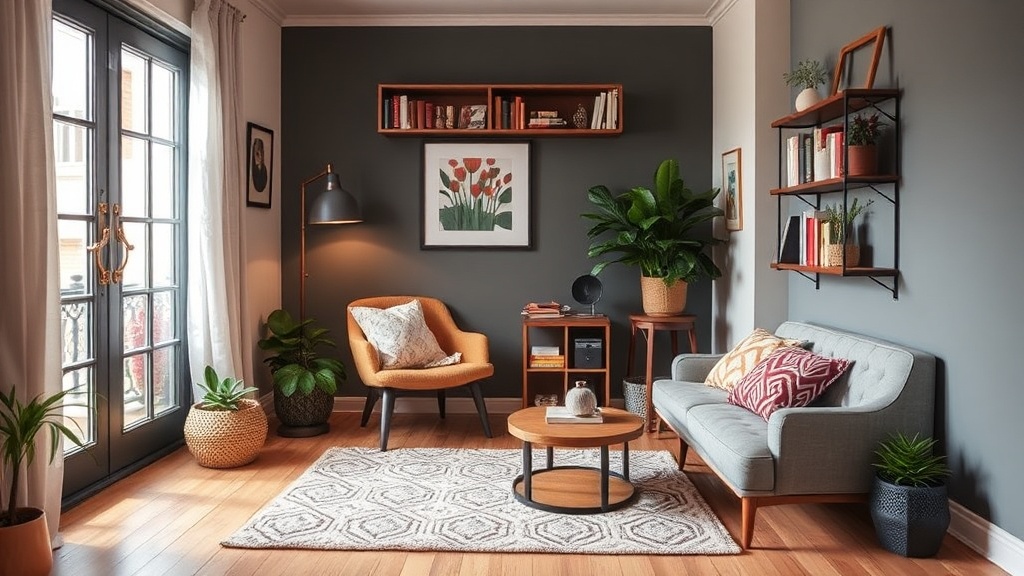
Creating a Cozy Nook: Build a Reading Corner in Any Small Apartment

Most people believe that creating a dedicated "reading nook" requires a spare bedroom or a sun-drenched alcove. This is a myth perpetuated by high-end interior design magazines that ignore the reality of studio apartments and one-bedroom rentals. You do not need an extra 100 square feet to claim a space for yourself; you only need to redefine the boundaries of the space you already pay for. A reading corner is not a structural addition; it is a psychological shift achieved through texture, light, and intentional zoning.
Step 1: Identify Your "Dead Zones"
In a small apartment, every square inch is usually contested territory. However, most layouts contain "dead zones"—areas that serve no functional purpose but occupy visual space. Look for the corner behind a dining chair, the awkward gap between a bookshelf and a window, or even a corner of your bedroom that is currently just a graveyard for laundry baskets. These are your candidates.
To select the right spot, consider the flow of traffic. You do not want your reading nook to be a hurdle you have to jump over to reach the kitchen. A successful nook is tucked away but accessible. If you are working with a studio, look for a way to use a low-profile piece of furniture to create a visual barrier between your sleeping area and your relaxation area. This separation is vital for mental clarity when your "office" and "bedroom" are the same room.
The Importance of Zoning with Rugs
The biggest mistake renters make is leaving their furniture floating in a sea of beige laminate or gray carpet. To make a nook feel like a separate "room," you must anchor it. A small area rug acts as a visual boundary, telling your brain, "I am now in the reading zone."
Avoid thin, flimsy mats that will slide around and create a tripping hazard. Instead, look for a high-pile shag rug or a textured jute rug to add tactile warmth. If you are worried about the security deposit, ensure you use a non-slip rug pad underneath. For more inspiration on how to anchor a space, check out our guide on 6 high-impact rugs that transform a boring rental floor.
Step 2: Select Seating Based on Scale and Ergonomics
In a small apartment, a massive overstuffed armchair is a mistake. It will swallow the room and make the space feel claustrophobic. Instead, prioritize "small-scale" furniture that offers support without the bulk. You want a piece that invites you to sit for at least 45 minutes without causing back strain.
- The Mid-Century Accent Chair: Look for chairs with tapered wooden legs. Seeing the floor underneath the chair creates the illusion of more space, making the room feel airier.
- The Floor Lounge: If your apartment is truly tiny, skip the chair entirely. A high-quality floor pouf or a structured velvet floor cushion (like those from West Elm or even more budget-friendly options at Target) allows you to create a cozy corner that can be easily tucked away when guests arrive.
- The Window Bench: If you have a deep windowsill, use it. A custom-sized foam cushion topped with a linen cover can turn a ledge into a premium reading spot.
When choosing, consider the height. If you are sitting low to the ground, you will need a side table that is also low to the ground to keep your coffee or tea within reach without constant leaning.
Step 3: Layer Your Lighting
The single fastest way to ruin a reading nook is to rely on the "big light"—that harsh, clinical overhead fixture that comes standard in 90% of rental units. Overhead lighting flattens a room and kills the mood. To create a nook, you must introduce localized, warm-spectrum light.
A reading nook requires two types of light: task lighting and ambient lighting. Task lighting is functional; it allows you to see the text on the page without straining your eyes. Ambient lighting is emotional; it sets the "vibe" of the corner.
For task lighting, a floor lamp with an adjustable neck is your best friend. A classic pharmacy-style lamp provides directed light that doesn't bleed into the rest of the room. For ambient lighting, consider a small rechargeable cordless lamp or a string of warm LED lights draped over a nearby shelf. If you are struggling with the standard, unflattering lights in your unit, you should look into lighting layers to fix drab apartment overhead lights. This is the most effective way to transition a space from "rental unit" to "home."
Step 4: Add Vertical Interest and Texture
Once you have the floor (rug), the seat (chair), and the light (lamp), you need to build the walls of your nook. Since you likely cannot drill holes into your rental walls, you have to get creative with how you display your books and decor. A reading nook without books is just a chair in a corner; the books provide the character and the "library" feel.
Utilizing Vertical Space Without Damage
You need a way to keep your current reads within arm's reach. If you cannot install floating shelves, use these renter-friendly alternatives:
- The Leaning Ladder Shelf: A wooden or metal ladder shelf leans against the wall. It provides multiple tiers for books, small plants, and decorative objects without requiring a single nail.
- The Rolling Bar Cart: A three-tier metal cart (like the IKEA RÅSKOG) can serve as a mobile library and a side table. You can keep your books on the bottom two tiers and your tea/coffee supplies on the top.
- Command Hooks for Art: To make the corner feel finished, you need art at eye level. Use Command hooks to hang lightweight frames or even lightweight fabric tapestries to add texture to the walls.
The Sensory Details
A reading nook is a multi-sensory experience. To truly "finish" the corner, add a throw blanket. Avoid the cheap, synthetic fleece that feels scratchy; instead, look for a weighted cotton throw or a chunky knit wool blanket. The weight of a heavy blanket provides a sense of security and helps lower cortisol levels while you read.
Finally, introduce a single organic element. A small snake plant (Sansevieria) or a ZZ plant is ideal because they are incredibly hard to kill and thrive in the lower-light environments often found in apartment corners. The greenery breaks up the hard lines of the furniture and makes the space feel lived-in and intentional.
The Maintenance of a Nook
The biggest threat to a reading nook in a small apartment is "clutter creep." Because these nooks are often tucked into corners, they quickly become the place where you drop your mail, your discarded sweater, or your laptop bag. To prevent your cozy corner from becoming a junk pile, you must maintain a strict "one-in, one-out" rule for objects. If you add a new book or a new candle, something else must be moved or stored away.
Every Sunday, do a quick "reset" of the nook. Fold the throw blanket, straighten the book stack, and clear the side table. This ensures that when you sit down on a Tuesday night after a long shift, you are entering a sanctuary, not a storage unit.
"A space is not defined by its square footage, but by the intention you bring to it. A corner is just a corner until you decide it is a destination."
Creating a reading nook is an act of rebellion against the cramped, utilitarian reality of rental living. It is a way to reclaim your autonomy and carve out a piece of the world that belongs solely to you, regardless of how many roommates you have or how thin your walls are.
Steps
- 1
Identify Your Dead Space
- 2
Select a Comfortable Anchor Piece
- 3
Layer Textures and Lighting
- 4
Add Functional Surfaces and Decor