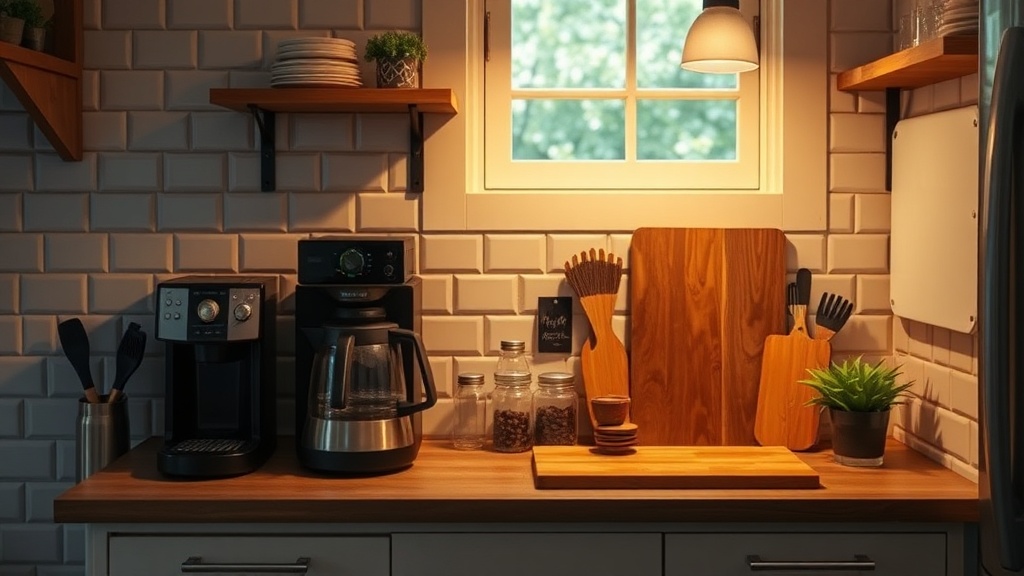
Building a Functional Coffee Station in a Small Kitchen

You wake up, stumble into your kitchen, and realize your coffee maker is sitting right next to your cutting board. You try to grind beans, but the coffee grounds end up in your toaster. It's a messy, cramped reality for anyone living in a first apartment with limited counter space. Creating a dedicated coffee station isn't just about looking like a cafe; it's about reclaiming your kitchen counters from the chaos of daily routines. This guide covers how to organize your caffeine-related tools without taking up the entire room.
Most people think they need a massive kitchen island to host a coffee station. You don't. Whether it's a corner of your countertop, a small rolling cart, or a dedicated shelf, the goal is to group your tools together so they stay out of the way of your actual meal prep. We'll look at how to pick a spot, what gear you actually need, and how to keep it looking intentional rather than cluttered.
Where Should I Put My Coffee Station?
The biggest mistake I see is people trying to squeeze a coffee station into a high-traffic prep area. If you're chopping onions on one side and making a latte on the other, you're going to run out of room. Look for "dead zones" in your kitchen. These are areas that don't see much action during heavy cooking, such as a corner, a small stretch of counter near a window, or even a small side table in the dining area.
If your counters are truly tiny, don't overlook the vertical space. A small-scale baker's rack or a tiered tray can hold your mugs and beans while occupying a much smaller footprint than a standard appliance. If you're working with a studio layout, a small bar cart can even act as a mobile station that you can tuck away when you aren't using it. This keeps your workspace clear when you're actually cooking dinner.
Common Coffee Station Layouts
Depending on your space, you'll likely fall into one of these three categories:
- The Countertop Nook: Best for small apartments with zero floor space. Use a tray to group your machine, sugar, and spoons.
- The Rolling Cart: Great for those who want to move their station to the living room or dining area.
- The Wall-Mounted Setup: Ideal if you have a small counter but plenty of vertical room. Think floating shelves or pegboards.
A tray is a secret weapon here. By placing your coffee maker, a jar of beans, and your syrups on a single tray, you signal to your brain (and your guests) that this is a specific zone. It also prevents the "drift" where items slowly migrate across your kitchen. It keeps things contained.
What Supplies Do I Actually Need?
It is easy to get carried away buying every gadget on a social media feed. Before you buy a milk frother or a specialized grinder, look at what you actually use. A functional station requires three things: the brewer, the vessel, and the additives. If you're a simple black coffee person, you don't need a dozen syrups and a sugar bowl taking up space.
For those who want a bit more, consider these categories:
| Category | Items | Space Tip |
|---|---|---|
| The Essentials | Coffee Maker, Water, Mugs | Keep them close to a power outlet. |
| Flavoring | Syrups, Honey, Sugar | Use small glass jars to save space. |
| Tools | Spoons, Frother, Timer | Hang small tools on a pegboard. |
If you're working with a tight budget, don't feel pressured to buy designer canisters. A simple glass jar from a place like IKEA can hold your coffee beans and look much more expensive than it is. The key is consistency. If all your containers look similar, the station feels cohesive rather than a collection of random bottles.
How Do I Keep My Coffee Station From Looking Messy?
The biggest enemy of a small-space coffee station is clutter. Once you add a bag of beans, a spilled spoon, and a pile of used napkins, it looks like a mess. To keep it looking clean, you need a strict organization rule. Use a small, dedicated bin for your used coffee pods or grounds so they don't sit out on the counter.
Another tip is to manage your cords. A tangled black cord trailing behind a coffee maker looks terrible. Use adhesive cord clips to run the wire behind the machine or even down the back of a shelf. This keeps the visual lines clean. Also, consider the height of your items. If everything is the same height, the station looks flat. Using a tiered stand or a small riser for your syrups adds depth and makes the area look more professional.
If you find yourself running out of room for your mugs, try a mug tree or a wall-mounted rack. This moves the bulk of the storage off the counter and onto the walls. It's a simple way to keep your most-used items within reach without sacrificing your prep space. For more ideas on organizing small spaces, checking out resources like Apartment Therapy can provide great inspiration for tiny kitchen layouts.
Remember, the goal is a routine that feels easy. If your station is a mess, your morning starts with a bit of friction. If it's organized and tucked into a corner, it becomes a small, pleasant ritual rather than an obstacle in your kitchen. Start small, get the essentials right, and expand only when you've mastered the layout.