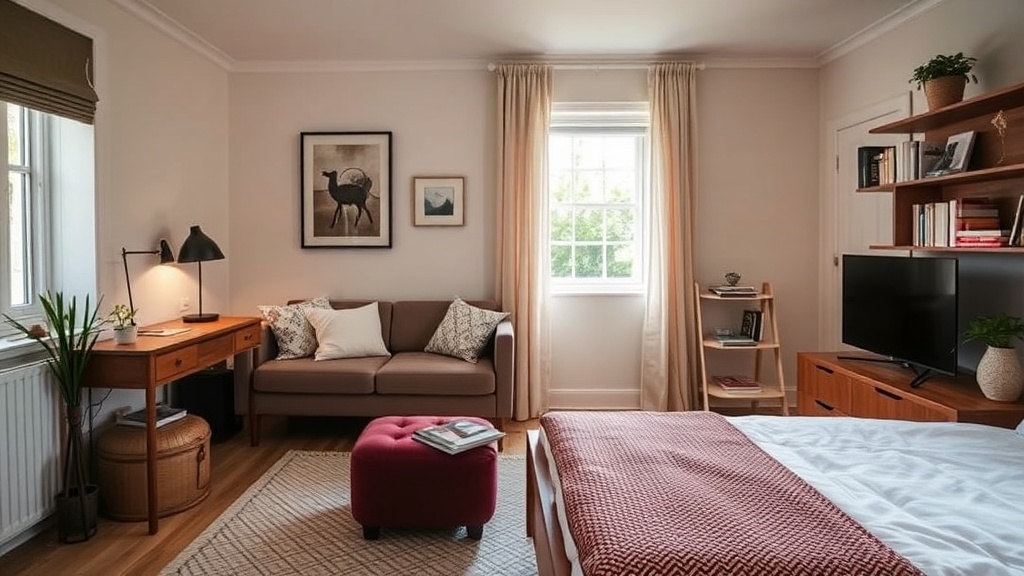
7 Smart Furniture Pieces for Tiny Studio Apartments

Nesting Tables for Flexible Surface Area
The Ottoman with Hidden Storage
A Lift-Top Coffee Table for Dining
Modular Sofa Sections
Wall-Mounted Drop-Leaf Desks
Bed Frames with Built-in Drawers
Folding Accent Chairs
This post outlines seven specific types of furniture designed to maximize floor space, increase storage capacity, and maintain functionality in a small studio apartment. You will learn how to select pieces that serve multiple purposes, ensuring your living area feels organized rather than cluttered.
1. The Lift-Top Coffee Table
In a studio apartment, the line between your living room and your dining area is often non-existent. A standard coffee table occupies valuable central real estate without providing much utility. A lift-top coffee table solves this by featuring a mechanical top that raises and moves toward the user, turning a low surface into a functional desk or dining table.
When shopping for these, look for models with a hollow interior compartment. Brands like West Elm and Article often carry mid-century modern versions that hide remote controls, laptop chargers, and magazines out of sight. This prevents the "clutter creep" that happens when you use your living room as an office. Because the surface lifts up, you can sit comfortably on your sofa while working or eating, rather than hunching over a low surface which leads to poor posture.
If you are on a tighter budget, you can achieve a similar effect by using a folding table for actual meal times and keeping a smaller, static coffee table for lounging. However, a dedicated lift-top piece is a more permanent, aesthetic solution for a cohesive interior design.
2. The Storage Ottoman
A storage ottoman is perhaps the most versatile tool in a small apartment toolkit. It serves as a footrest, extra seating for guests, and a hidden storage bin. In a studio, where you might not have a dedicated guest room or even a large closet, the ability to stow away seasonal items like heavy winter blankets or extra pillows is essential.
Look for rectangular or square designs in durable fabrics like velvet or heavy linen. A firm, upholstered ottoman can function as a coffee table if you place a wooden tray on top to stabilize your drinks. This dual-purpose approach saves you from buying two separate pieces of furniture. If you live in a high-traffic area of your apartment, ensure the hinge mechanism is sturdy to prevent the lid from slamming shut.
3. The Nesting Side Tables
Nesting tables are a strategic way to manage surface area. These are sets of two or three tables of graduated sizes that stack neatly underneath one another. When you are alone or working, you can tuck them away to keep the walkways clear. When you have a friend over for drinks, you can pull them out to provide extra surfaces for glasses and snacks.
For a more modern aesthetic, look for metal-framed nesting tables. They are lightweight and easy to move around the room. Unlike heavy wooden end tables, these won't make a small room feel "heavy" or visually cramped. They are particularly useful next to a sofa or a bed, providing a temporary spot for a phone or a book without the permanent footprint of a large nightstand.
4. The Daybed with Trundle
The biggest challenge in a studio is the "bedroom" problem. You want a place to sleep, but you don't want your apartment to feel like a bedroom with a desk attached to it. A daybed provides a solution by functioning as a sofa during the day and a full-sized bed at night. This helps maintain the "living room" vibe of your main area.
Select a daybed with a trundle underneath. The trundle is a pull-out bed frame that stays hidden under the main unit, making it perfect for hosting overnight guests without needing to own a bulky guest bed. To make it look like high-end furniture rather than a temporary setup, use large back pillows or bolsters against the wall to create a "backrest" effect. This creates a structured, intentional look that mimics a traditional couch.
5. The Ladder Shelf
Vertical space is your most underutilized asset in a small studio. Most people focus on floor space, but the walls are where the real storage potential lies. A ladder shelf—also known as a leaning shelf—utilizes vertical height while maintaining a very small footprint on the floor. Because these shelves taper toward the top, they feel much lighter and less imposing than a standard bookshelf.
Use the lower, wider shelves for heavier items like storage baskets or books, and the higher, narrower shelves for lighter decorative items like small plants or framed art. This keeps the visual weight at the bottom, making the room feel grounded. If you are worried about stability, ensure you have a way to anchor the top of the shelf to the wall, especially if you live in an older building with uneven surfaces.
6. The Parson-Style Dining Table with Bench Seating
A standard dining set with four chairs can dominate a small kitchen or dining nook. Instead, opt for a slim dining table paired with a bench. Benches are highly efficient because they can be pushed completely under the table when not in use, clearing the walkway. Furthermore, a bench can serve as extra seating in the living area if you are hosting a larger group.
When choosing a table, look for "apartment-sized" versions that are roughly 30 to 36 inches wide. This prevents the table from feeling like an obstacle in your path. If you want to keep the space feeling open, choose a table with a glass or light wood top. This allows light to pass through or reflect, which prevents the furniture from feeling like a "wall" in the middle of your studio.
7. The Modular Sectional Sofa
Traditional sectionals are often too large for studio apartments, but modular sectionals are designed specifically for flexibility. These are made of individual pieces (modules) that can be rearranged. You might start with a small two-piece setup, and if you move to a larger apartment later, you can purchase additional modules to expand it.
The advantage of a modular piece is that it can adapt to your layout. If your living area is long and narrow, you can arrange the pieces in a line. If your area is more square, you can create an L-shape. This adaptability is crucial as you learn how to navigate the different zones of your studio. Look for low-profile designs to ensure the sofa doesn't block your line of sight, which helps the entire apartment feel larger and more airy.
Summary Checklist for Small Space Furniture
Before making a purchase, run your potential new piece through this quick checklist to ensure it is right for your studio:
- Does it have dual functionality? (e.g., a coffee table that is also a desk)
- Does it utilize vertical space? (e.g., a tall shelf rather than a wide one)
- Can it be tucked away? (e.g., nesting tables or a bench that slides under a table)
- What is the visual weight? (e.g., does it have legs to show more floor, or is it a solid block?)
- Is it mobile? (e.g., can it be easily moved if you need to reconfigure the room?)
Investing in the right pieces early on will prevent you from constantly feeling like you are "outgrowing" your space. Focus on quality, multi-use items that serve your lifestyle rather than just filling a gap.