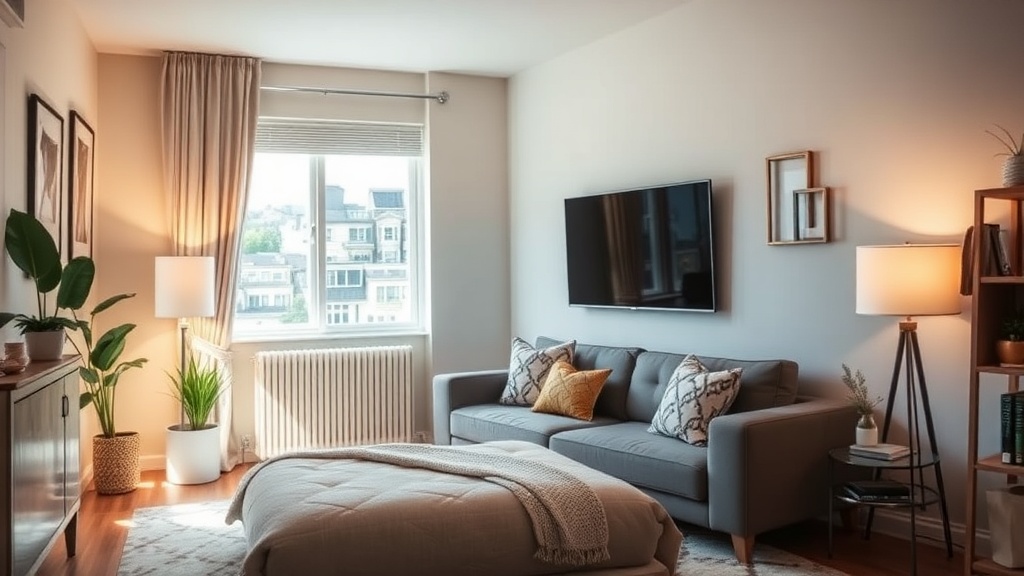
5 Budget-Friendly Decor Upgrades That Transform Your First Apartment

Swap in Removable Peel-and-Stick Wallpaper
Layer Textiles with Throw Blankets and Pillows
Upgrade Lighting with Plug-In Sconces and Bulbs
Add Greenery with Low-Maintenance Houseplants
Create a Gallery Wall with Thrifted Frames
Decorating a first apartment doesn't require a massive budget or a professional designer on speed dial. This post covers five practical, affordable upgrades that deliver serious visual impact in rental spaces. You'll learn how to fake built-in character, brighten dark corners, and make cheap furniture look intentional — all without forfeiting the security deposit. Whether the space is a 400-square-foot studio or a two-bedroom shared with roommates, these ideas work.
How Can You Make a Rental Apartment Look High-End on a Budget?
You can make a rental apartment look expensive by focusing on the details renters usually ignore: lighting, textiles, and hardware. These three categories cost less than a new sofa but do more for the overall vibe than almost anything else. The trick is consistency — picking a color palette and repeating it across accessories so the space feels designed rather than assembled from hand-me-downs.
That said, "high-end" doesn't mean marble countertops and custom cabinetry. It means good light, soft textures, and a few deliberate choices that draw the eye upward. Most first apartments come with beige walls, flush-mount ceiling fixtures, and blinds that buzz when the wind hits them. Fixing those three problems alone transforms the room.
1. Replace Harsh Overhead Lighting
Overhead lighting in rentals is almost always terrible. Yellow bulbs, plastic domes, and fixtures placed exactly where they cast shadows on faces. The fastest fix? Remove the landlord's bulb and swap in a warm-white LED dimmable bulb (2700K) from The Home Depot. It costs under $10 and instantly softens the room.
The next step is adding layers. A floor lamp in a dark corner, a table lamp on a side table, and maybe a pendant plugged into a wall socket (swag-style) over the dining area. The IKEA HEKTOGRAM floor lamp runs about $35 and throws light upward, which bounces off the ceiling and makes the ceiling feel higher. For desks or nightstands, the TERTIAL work lamp — also from IKEA — is $10 and has an adjustable arm that actually works.
Here's the thing: renters often assume they can't touch ceiling fixtures. In many cases, swapping a flush mount for a semi-flush mount or a simple drum pendant takes ten minutes and can be reversed at move-out. Just store the original fixture in a closet and reinstall it later. Worth noting: if the ceiling box is centered over a table, a plug-in pendant like the GRÅVACKA from IKEA avoids any electrical work entirely.
What Are the Best Affordable Lighting Upgrades for Small Apartments?
The best affordable lighting upgrades for small apartments are plug-in wall sconces, LED strip lights, and warm-white bulbs in multiple lamps. These options don't require hardwiring, take up zero floor space, and create the layered light that makes a tiny room feel larger than it is.
LED strip lights tucked behind a headboard, under kitchen cabinets, or along the back of a TV stand add depth without bulk. The Philips Hue Lightstrip is the premium option, but the Govee LED Strip Lights from Amazon cost a fraction of the price and offer app-controlled dimming. In a studio, placing a strip behind a sofa or bookshelf carves out visual zones — sleep area versus living area — without a single room divider.
2. Invest in Textiles (Rugs, Curtains, and Throw Pillows)
Hard floors and bare windows make apartments feel echoey and temporary. A rug anchors furniture. Curtains add height. Throw pillows make a cheap sofa look intentional. Together, they're the easiest way to add color and texture without painting a wall.
For rugs, avoid the temptation to buy one that's too small. In a living room, the front legs of the sofa and both chairs should sit on the rug — even in a small space. The Ruggable line offers machine-washable rugs starting around $150, which matters when there's no outdoor hose for cleaning. For a tighter budget, Target's Threshold collection carries 5x7 and 8x10 rugs under $100 that hold up surprisingly well for a year or two.
Curtains should hang high and wide. Mount the rod 4–6 inches above the window frame and extend it 6–10 inches past the sides. This tricks the eye into seeing a bigger window. The Velvet Grommet Curtain from Target or the Lenda curtains from IKEA both come in long lengths (96" and 108") for under $40 per pair. Avoid the 84" length unless the ceiling is unusually low — it tends to cut the wall in half.
Throw pillows are where personality shows up. Mix two patterns and one solid in a shared color family. West Elm's Cotton Velvet Pillow Covers ($30–$40) feel expensive but go on sale regularly. For a fraction of the cost, H&M Home and IKEA offer covers under $15. The catch? Feather-down inserts (available at IKEA as Inner inserts) look plumper and more high-end than polyester stuffing.
3. Use Removable Wallpaper and a Gallery Wall
Rental walls are usually some variation of off-white or greige. Rather than living with them, renters can add temporary wallpaper in an accent area — the wall behind the bed, the inside of a bookshelf, or the backsplash in a kitchen. Wallpaper Direct and Target both carry peel-and-stick options that remove cleanly.
The key is scale. A busy pattern on all four walls closes in a small room. One feature wall, though, reads as architecture. The Tempaper brand sells rolls in 20.5" widths for $35–$60, and most accent walls need two to three rolls. For kitchens, Smart Tiles peel-and-stick backsplash tiles mimic subway tile or Moroccan zellige for $10–$15 per sheet.
If wallpaper feels like too much commitment, a gallery wall does similar work. Use Command Picture Hanging Strips to avoid nail holes. Mix frames from Target, thrift stores, and IKEA's RIBBA line for a collected look. Include one larger piece (16x20 or bigger) as an anchor and fill in with smaller frames around it. The result looks curated — not like a dorm room poster cluster.
Where Should You Spend Money First When Decorating Your First Apartment?
Spend money first on the items that get used every single day and are hardest to fake: the mattress, the sofa, and window coverings. After those basics, the next dollars should go toward lighting and textiles because they fix the most common rental problems — bad overhead bulbs, echoey rooms, and bare windows.
Here's a quick breakdown of where to allocate a $500 decor budget for maximum impact:
| Upgrade | Budget Allocation | Example Purchase | Impact |
|---|---|---|---|
| Area Rug | $80–$120 | Target Threshold 7x10 Rug | Defines living space, adds warmth |
| Lighting | $60–$100 | IKEA HEKTOGRAM + TERTIAL + LED bulbs | Eliminates harsh overhead glare |
| Curtains + Rod | $60–$80 | IKEA Lenda 96" + Hugad Rod | Makes ceilings feel taller |
| Throw Pillows + Covers | $40–$60 | H&M Home Covers + IKEA Feather Inserts | Adds color and texture to sofa |
| Removable Wallpaper | $50–$80 | Tempaper 2 Rolls for Accent Wall | Creates a focal point |
| Plants + Planters | $40–$60 | Snake Plant + Ferm Living Planter | Brings life and height to corners |
4. Add Plants and Planters at Varying Heights
Plants are the cheapest sculpture available. A tall fiddle-leaf fig (or a convincing fake one) draws the eye up and fills an empty corner. Smaller plants — pothos, snake plants, ZZ plants — sit on shelves, side tables, and windowsills. The goal is three heights: floor plants, tabletop plants, and trailing plants on high shelves.
Real plants win for texture and air quality, but realistic faux plants have improved dramatically. IKEA's live plant section sells snake plants and pothos for under $15. For faux options, Target's Threshold Artificial Fiddle Leaf Fig and West Elm's faux trailing plants look convincing from a few feet away.
The planter matters as much as the plant. A basic plastic nursery pot hidden inside a ceramic or textured planter looks instantly more expensive. Ferm Living, CB2, and even IKEA's CHILISTRÅN series offer planters under $30. Grouping three plants at different heights on a single tray or stand creates a little vignette that looks styled rather than random.
5. Swap Hardware and Small Fixtures
Cabinets and doors in rentals usually have the cheapest brass or brushed-nickel knobs the builder could find. Swapping cabinet pulls, door knobs, and switch plates takes a screwdriver and transforms kitchens and bathrooms. Keep the original hardware in a labeled bag and reinstall it before moving out.
In the kitchen, matte black or brushed brass pulls make even the most basic white cabinets feel current. The Liberty Hardware line at Home Depot offers pulls for $3–$6 each. A small galley kitchen might need only eight to ten pulls, so the total cost stays under $50. For bathrooms, a new toilet paper holder and towel bar in a matching finish tie the room together.
Switch plates and outlet covers are another $20 upgrade that's rarely considered. Standard beige or off-white plates age a room instantly. Replacing them with clean white or stainless steel covers — Leviton makes them for under $2 each — makes walls look crisp. It's a five-minute job per plate.
Door handles are a slightly bigger project but worth it if the existing ones are wobbly or yellowed. A passage lever set from Kwikset or Schlage costs $20–$40 and installs with a Phillips head. That said, some leases restrict door hardware changes, so check the rental agreement first.
These five upgrades don't require a contractor, a credit line, or permission from a landlord in most cases. Start with lighting and textiles — they fix the biggest problems fastest — then layer in walls, plants, and hardware as time and budget allow. A first apartment will never be perfect, but with a few deliberate choices, it can feel like home the day the boxes are unpacked.