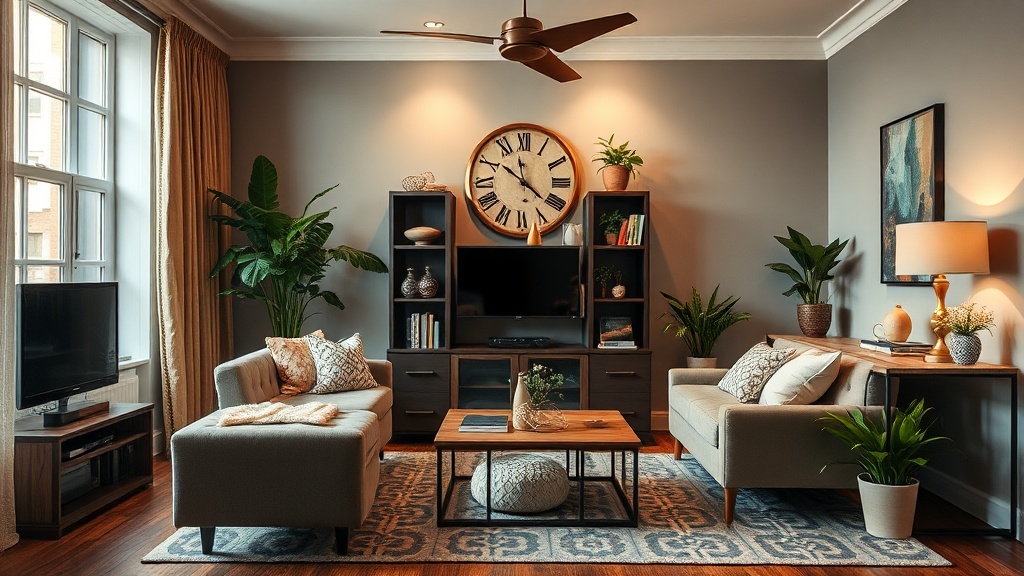
10 Essential Decorating Tips for Your First Apartment on a Budget

Invest in Multi-Functional Furniture
Use Removable Hooks and Command Strips for Damage-Free Hanging
Layer Textiles to Add Warmth and Personality
Maximize Vertical Space with Shelving Units
Shop Secondhand and Thrift for Unique Finds
Decorating a first apartment doesn't require draining savings or settling for dorm-room leftovers. This guide covers ten practical, budget-conscious strategies for transforming rental spaces into polished homes — from scoring deals at estate sales to arranging furniture for maximum impact. Whether working with 400 square feet or a spacious two-bedroom, these approaches help stretch every dollar while creating a space that actually feels grown-up.
What Are the Best Budget-Friendly Stores for First Apartment Furniture?
The best budget furniture stores combine quality basics with reasonable prices — think IKEA for modular storage, Facebook Marketplace for solid wood pieces, and Target's Threshold line for mid-century modern vibes without the vintage price tag.
Furniture shopping on a budget demands strategy. Start with secondhand sources before hitting retail. Estate sales in established neighborhoods (especially on Sundays when prices drop) often yield solid wood dressers, vintage lamps, and quality rugs for a fraction of retail cost. The trick? Arrive early for selection, or late for discounts.
Here's the thing about IKEA — the Billy bookcase and Kallax shelving units have survived decades of design trends for good reason. They're affordable, adaptable, and don't look cheap when styled properly. Pair a $79 Kallax unit with woven baskets from HomeGoods and suddenly that particleboard cube system looks intentional.
For soft goods, don't overlook Wayfair's clearance section or Overstock's flash deals. Both frequently offer free shipping on orders over $35, which beats hauling a sofa in a compact car. That said, always check return policies before ordering — some budget retailers charge restocking fees that erase the savings.
How Do You Make a Rental Apartment Look Expensive Without Spending Much?
Rental apartments look expensive when they demonstrate cohesion, proper lighting, and attention to small details — things achieved through paint (where allowed), consistent hardware finishes, and strategic textile upgrades rather than major purchases.
Paint remains the single highest-impact, lowest-cost transformation available. Many landlords allow neutral repaints with approval (get it in writing). A warm white like Benjamin Moore's "Simply White" or Sherwin-Williams' "Alabaster" instantly modernizes dated beige walls. The catch? You'll need to paint it back before moving, or forfeit the security deposit. Worth it for a two-year stay. Probably not for six months.
Lighting transforms everything. Overhead fixtures in rentals are universally terrible — harsh, yellow, and positioned wrong. Layer instead: floor lamps with warm bulbs (2700K), table lamps with linen shades, and battery-operated puck lights inside cabinets. Philips Hue bulbs cost more upfront but last years and create ambiance that cheap fixtures cannot.
Hardware swaps take ten minutes and cost under $50 total. Cabinet knobs, drawer pulls, and switch plates from Amazon Basics or Lowe's designer collections instantly update kitchens and bathrooms. Store the originals in labeled bags and reinstall them before moving out. (That security deposit stays intact.)
What Decorating Mistakes Should First-Time Renters Avoid?
First-time renters commonly blow budgets on oversized furniture, ignore vertical space, and buy matching "room in a box" sets that feel sterile — mistakes easily prevented with measurement, patience, and mix-and-match thinking.
Scale disasters top the list. That sectional looks reasonable in a warehouse store. In a 12-foot living room? It's a monster. Measure twice — including doorways, stairwells, and elevator dimensions. Apps like Magicplan (free version works fine) create accurate floor plans using phone cameras. Bring a tape measure to every shopping trip. No exceptions.
The "room in a box" phenomenon — buying a matching sofa, loveseat, chair, and ottoman from the same collection — creates showroom floor aesthetics. Boring. Safe. Expensive. Instead, anchor with one larger investment piece (a quality sofa from Article or a vintage find) and build around it with complementary, not matching, secondary pieces.
Vertical space goes overlooked constantly. Renters focus on floor area and forget walls reach eight feet (or higher). Tall bookcases draw eyes upward, creating perceived spaciousness. Hang curtains closer to the ceiling than the window frame — this trick adds apparent height to any room. Mount floating shelves for plants, photos, and objects that personalize without consuming floor space.
Common First Apartment Budget Traps
| Trap | Why It Hurts | Smarter Alternative |
|---|---|---|
| Buying everything new | Depreciates immediately, limited character | 70% secondhand, 30% strategic new purchases |
| Trend-chasing decor | Looks dated in 18 months, hard to resell | Neutral foundations, swapable trend accessories |
| Ignoring storage needs | Clutter accumulates, spaces feel smaller | Multi-functional furniture (ottomans, bed frames with drawers) |
| Cheap tools and supplies | Frustrating results, redone work | Quality basics: decent drill, level, stud finder |
How Can You Personalize a Rental Without Losing Your Deposit?
Rentals become personal through removable solutions: peel-and-stick wallpaper, Command strips for art, area rugs covering ugly floors, and plants — lots of plants — that transform sterile boxes into lived-in homes.
Peel-and-stick wallpaper has evolved dramatically. Companies like Tempaper and Spoonflower offer designs that actually stay up (and come down cleanly) for $50-80 per roll. One accent wall behind a bed or sofa creates focal impact without commitment. Test a small patch first — some cheap rentals have poorly prepped walls that refuse to release adhesive.
Art hanging without holes requires planning. Command strips work for pieces under 20 pounds. For heavier items, lean large canvases against walls on console tables — very gallery-chic. Propped mirrors reflect light and double visual space without wall damage. The thing about gallery walls? They're overdone anyway. Three larger pieces often look more sophisticated than fifteen small frames.
Plants solve countless decorating problems simultaneously. They fill empty corners, soften harsh lines, and literally make spaces feel alive. Start with forgiving varieties: pothos (thrives in low light), snake plants (neglect-resistant), and ZZ plants (practically immortal). The Sill ships healthy starter plants with care instructions. Local nurseries in most cities offer better prices and local expertise.
What Should You Buy First When Moving Into Your First Apartment?
Priority purchases include: a comfortable mattress (you'll spend a third of your life there), blackout curtains (sleep quality affects everything), and a decent shower curtain with liner (immediate daily impact) — followed by seating and storage solutions.
The mattress matters more than the bed frame. A $200 Amazon Basics metal frame supports a quality mattress perfectly well. Spending $600-800 on a Tuft & Needle Original or Casper Element pays dividends in sleep quality. That said, if the budget's tight, a memory foam topper on a hand-me-down mattress buys time.
Kitchen basics deserve strategic investment. You need one good chef's knife (Victorinox Fibrox, $40), not a block of mediocre knives. One solid skillet (Lodge cast iron, $25), one saucepan, and one baking sheet handle 80% of cooking tasks. Add pieces as skills develop, not before.
Wait on decorative items. The temptation to immediately "finish" a space leads to regret purchases. Live in the apartment for a month. Notice traffic patterns. Identify where clutter accumulates. Then buy storage and decor that actually fits the space and lifestyle — not some Pinterest fantasy of what adult life should look like.
The 30-Day Purchase Timeline
Week 1: Sleep system (mattress, bedding, blackout curtains), shower curtain, toilet paper holder, towels, basic cleaning supplies, one lamp.
Week 2: Seating (even if it's folding chairs temporarily), dining surface, kitchen basics, trash cans.
Week 3: Storage solutions identified from actual living patterns, additional lighting, window treatments.
Week 4: Art, decorative objects, plants — the personality pieces that make it yours.
How Do You Create Zones in a Studio Apartment?
Studio apartments divide into functional zones using furniture placement, rugs, lighting variations, and visual screens — no construction required.
Rugs define territory better than walls. A large area rug under the "living room" seating area creates psychological separation from the sleeping zone. The visual boundary matters more than physical barriers. Position the bed against a wall (never floating in the center), then place a sofa or loveseat perpendicular to it, creating an L-shaped division.
Bookcases and screens provide semi-permeable boundaries. The IKEA Kallax works brilliantly here — accessible from both sides, it stores bedroom items facing the bed and living room items facing the sofa. A folding screen (check estate sales) adds privacy and architectural interest. Or hang a curtain from the ceiling using a tension wire system — dramatic, inexpensive, and removable.
Lighting separates spaces through intensity. Bright task lighting in kitchen and work areas. Warm, dimmable ambient lighting in living zones. Minimal lighting in sleeping areas signals the brain to wind down. The catch with studios? One bad lighting choice affects everything. Layer carefully.
Color cohesion prevents visual chaos. Stick to a limited palette — two main colors plus neutral bases. This creates flow rather than fragmentation. A blue and cream scheme, for example, reads intentional throughout 500 square feet. Random color explosions in each "zone" feel cluttered and small.
Decorating a first apartment on a budget rewards patience and creativity over spending. Start with what matters most — sleep, function, light. Build slowly. The spaces that feel best rarely come together in a single shopping weekend. They evolve as you learn the rhythms of the space and what actually serves daily life. That $40 estate sale dresser with good bones and a fresh coat of paint will always outperform the particleboard alternative from a big-box store. Trust the process. The best rooms develop stories over time.